

FIKKIA NEWS – Group 03 Public Health Internship Program, Faculty of Health Sciences, Medicine, and Natural Sciences (FIKKIA) UNAIR held socialization and education related to sanitation and safe and healthy food processing to the people of Banjar Village, Licin, Banyuwangi. This activity aims to increase public awareness about the importance of maintaining environmental and personal cleanliness, as well as the selection and processing of healthy food to prevent disease and improve quality of life.
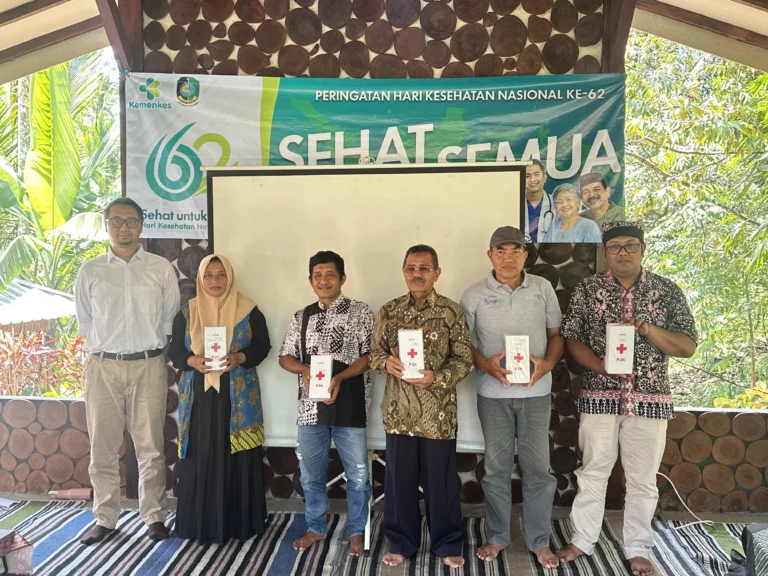
The socialization took place on Tuesday, (21/01/2025), at the Banjar Village Hall. 26 residents from 4 hamlets attended the series of SEHAT programs designed by students. The PKL 03 group consisting of 10 fifth semester students facilitated an educational session involving various interactive activities.
Preventing Diarrhea with Community-Based Total Sanitation
The activity began with the first material delivered by Karina Midyawanti, A.Md Sanitarian from Licin Health Center, regarding the importance of sanitation to prevent diarrhea. Participants were taught the importance of maintaining environmental cleanliness, clean water, and good sanitation at home to prevent the spread of environmental-based diseases, especially diarrhea.
Hand Washing Practice with Soap (CTPS)
One of the important activities in this socialization is the practice of Washing Hands with Soap (CTPS). Participants are invited to practice the correct way to wash their hands. CTPS is a simple step that is effective in preventing the spread of disease. Mothers are expected to understand that washing their hands properly can minimize the risk of diseases transmitted through dirty hands.
Safe and Healthy Food Processing
Maintaining cleanliness is always accompanied by proper food selection and processing. Licin Health Center nutritionist Angelistya Devi Pertiwi, A. Md.Gz, also taught participants about safe and healthy food processing. The hope is that the community will be more concerned about how to process food ingredients. So that there are no more health problems, especially nutrition, caused by a lack of maintaining cleanliness.

The right way to avoid health risks, such as food poisoning and digestive disorders. Participants are given real examples of how to choose fresh and contamination-free food ingredients, as well as hygienic and nutritious food serving techniques.

Fatim, a participant from Rembang Hamlet, expressed her impressions with great enthusiasm.
"To be honest, this is my first time attending to receive information about this kitchen science, serving and processing food becomes important when family health is the main thing that must be considered," said Fatim.
As a provision of knowledge for families at home, each participant took home a sanitation guide booklet made by the PKL students.

The activities in this article are the implementation of the SDGs values point 3, namely Good Health and Well-Being and point 6 Clean Water and Sanitation.
Author: Muhammad Ridwan
Editor: Avicenna C. Nisa