


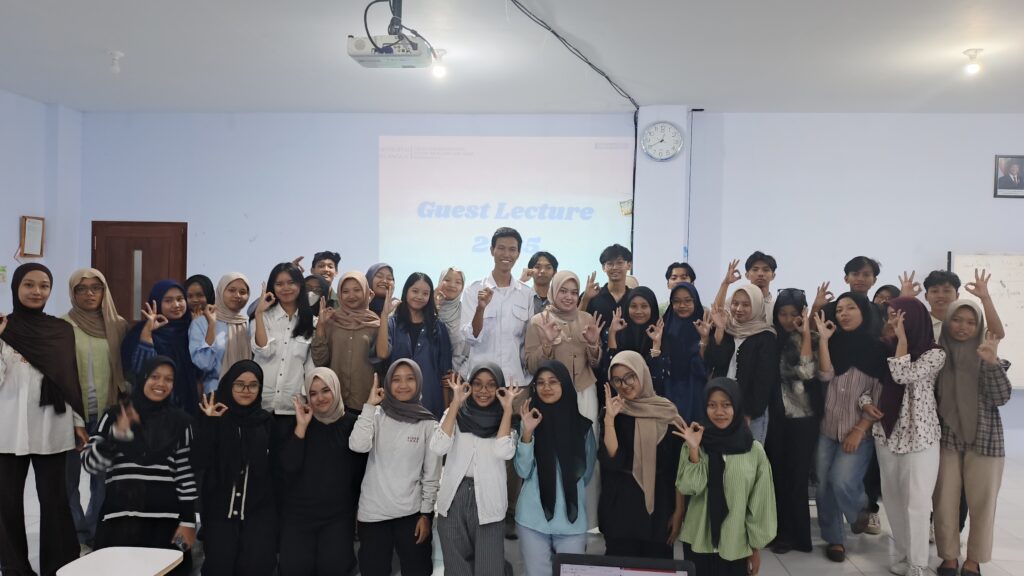
FIKKIA NEWS – Increasing knowledge of shrimp cultivation practices, Aquaculture Study Program FIKKIA held another guest lecture on Friday (November 28, 2025) in Class G203, Giri Campus. This time, the guest lecture discussed the ins and outs of shrimp pond water quality with inspiring alumna Dinda Yuni Istanti, S.Pi., a Laboratory Analyst at PT. Sidojoyo WutamaThe Guest Lecture was attended by 35 Aquaculture students from the 2024 class who are currently studying Water Quality Management.
The Importance of Water Quality in Shrimp Cultivation
Dinda explained that water quality is crucial for shrimp cultivation, specifically whiteleg shrimp cultivation. Water quality affects shrimp growth, health, and survival. Poor water quality can cause shrimp stress and make them susceptible to disease. Regular water quality measurements are also necessary as part of pond water quality management to ensure optimal shrimp growth.
Water Quality Parameters
Regular monitoring of water quality parameters is essential to creating an ideal pond environment. In her presentation, Dinda outlined three water quality measurement parameters. Physical parameters include water clarity, temperature, and color. Meanwhile, biological parameters focus on plankton density and the total number of bacteria and vibrios.
Vibrio monitoring is a crucial aspect in anticipating disease outbreaks in shrimp fry. The chemical parameters involved are broad and complex. These include Total Organic Matter (TOM), which measures the total organic matter, including feed residue and feces. Then, pH, which measures the ideal water acidity level, and Alkalinity, which buffers pH stability.
Biological Examination of Shrimp Hepatopancreas
Hepatopancreas The hepatopancreas is a digestive gland that plays an important role in shrimp. It functions as a detoxifier, produces digestive enzymes, and stores digestive products. Dinda explained that the hepatopancreas also functions as a boost energy in the form of fat and carbohydrates in shrimp.
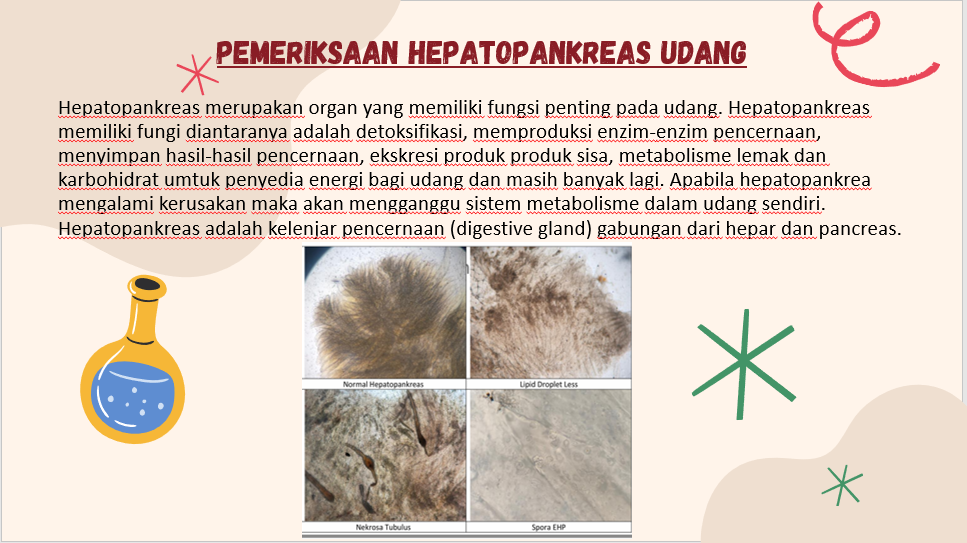
"If the hepatopancreas is damaged, shrimp metabolism will be disrupted and as a result, harvest yields will not be optimal," he said.
The 2017 Aquaculture Alumni opened the discussion and generated enthusiasm from the participants. The first question was posed by Kinanti Dwi Lestari (AKUA 24) about how to recognize the signs of diseased shrimp.
In response to this question, Dinda explained that diseased shrimp can be identified by physical changes, such as the appearance of white spots, a pale body color, or even a decreased appetite. If the cause of these changes is not immediately identified, the disease can quickly spread throughout the pond, resulting in crop failure.
The discussion concluded with a critical question from Muhammad Hilmy Maulana, S.Pi., M.Si., regarding the impact of sudden fluctuations in water levels on water quality parameters. Dinda explained that changes in water conditions of more than ±2°C can cause fatal stress in shrimp, so significant changes in water volume will inevitably have a significant impact on other parameters.
"To train your talent, take advantage of the moment while you're a student and focus on participating in every activity in the lab," he said.
At the end of the session, Dinda said that in carrying out cultivation in the world of aquaculture, it requires patience and accuracy so that every decision taken does not pose a big risk at the end of the harvest period.
Author: Farra Azzahrani
Editor: Avicenna C. Nisa


