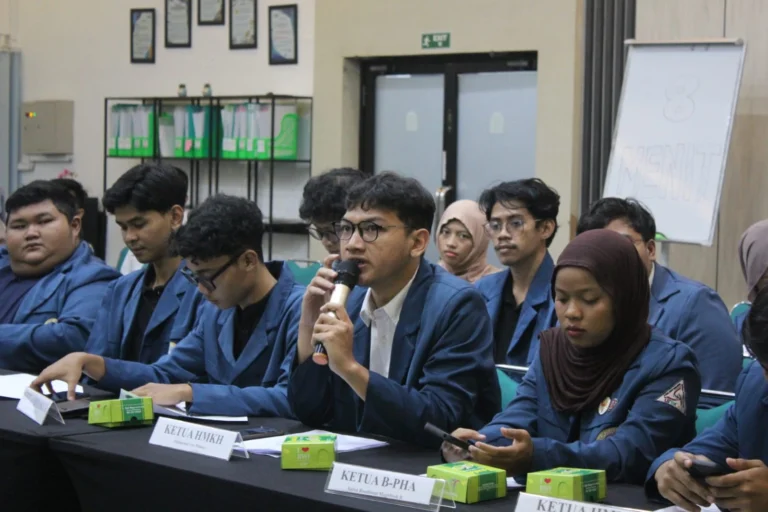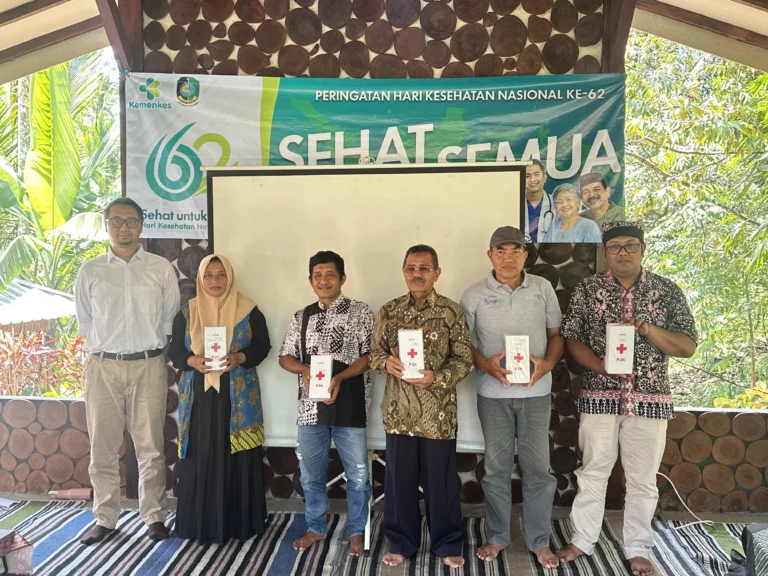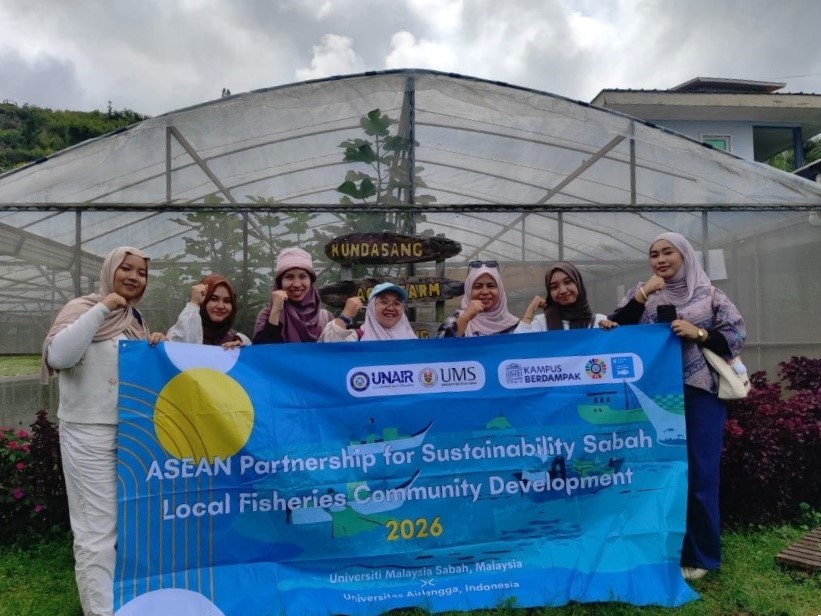
FIKKIA NEWS – Students and Lecturers of the Aquaculture Study Program FIKKIA UNAIR carrying out aquaponic technology education activities in Kundasang, Ranau, Sabah, Malaysia, on June 14, 2026. This activity is part of an international community service program held in collaboration with Borneo Marine Institute, University of Malaysia Sabah (UMS).
The activity was led by Dwi Retna Kumalaningrum, S.Pi., MP. together Dr. Norfrazeena Mohd FauziTwenty participants, including academics, practitioners, and community members, participated in the event to learn about the application of aquaponics technology as an approach to sustainable food production. Here's the story Retna shared with FIKKIA NEWS contributors (June 18, 2026).
Kundasang Aquafarm Becomes a Field Learning Facility
The training took place at Kundasang Aquafarm, located at the foot of Mount Kinabalu. This location was chosen because it exemplifies the application of aquaponics systems in highland areas, where environmental conditions differ from those of coastal areas and typical fish farming centers.

Through field visits, participants directly observed an aquaponics system that integrates red tilapia fish cultivation with lettuce plants (lactuca sativaThis system utilizes nutrients from fish farming waste to support plant growth in a connected cycle.
The application of this technology demonstrates how cultivation activities can be carried out by utilizing resources more efficiently through the integration of the fisheries and agriculture sectors.
Understanding the Concept and Components of Aquaponic Systems
In the educational session, the community service team explained the basic concept of aquaponics, a system that combines fish and plant cultivation in a single, integrated ecosystem. The fish's metabolic waste is used as a nutrient source for the plants, while the plants help absorb dissolved compounds that can affect water quality.
Participants were also introduced to the various main components of an aquaponics system, including the fish pond, growing media, water circulation system, and maintenance techniques needed to maintain the balance of the system.
Furthermore, the presentation covered aspects of water quality management, fish stocking density, and the selection of appropriate crop commodities for optimal system operation. Lettuce was chosen for its effective nutrient absorption and significant economic value. Meanwhile, the use of red tilapia was deemed suitable for local environmental conditions, making it easier to cultivate.
Supporting Sustainable Food Production
Integrating fish and crops into a single system allows for the simultaneous production of two food commodities while using land and water more efficiently. This approach is an alternative approach that can be implemented to support food production in various regional conditions, including highland areas and areas with limited land.
Through this activity, participants gained an understanding of the application of aquaponics technology and the various factors that need to be considered in its management. The activity also served as a platform for exchanging knowledge between academics, practitioners, and the community regarding the development of integrated cultivation systems.
In addition to supporting the collaboration between Airlangga University and Universiti Malaysia Sabah, this activity provides an opportunity for students from both universities to be directly involved in community education and observe the application of aquaponics technology in the field.
Author: Sabitha Helmi
Editor: Avicenna C. Nisa