

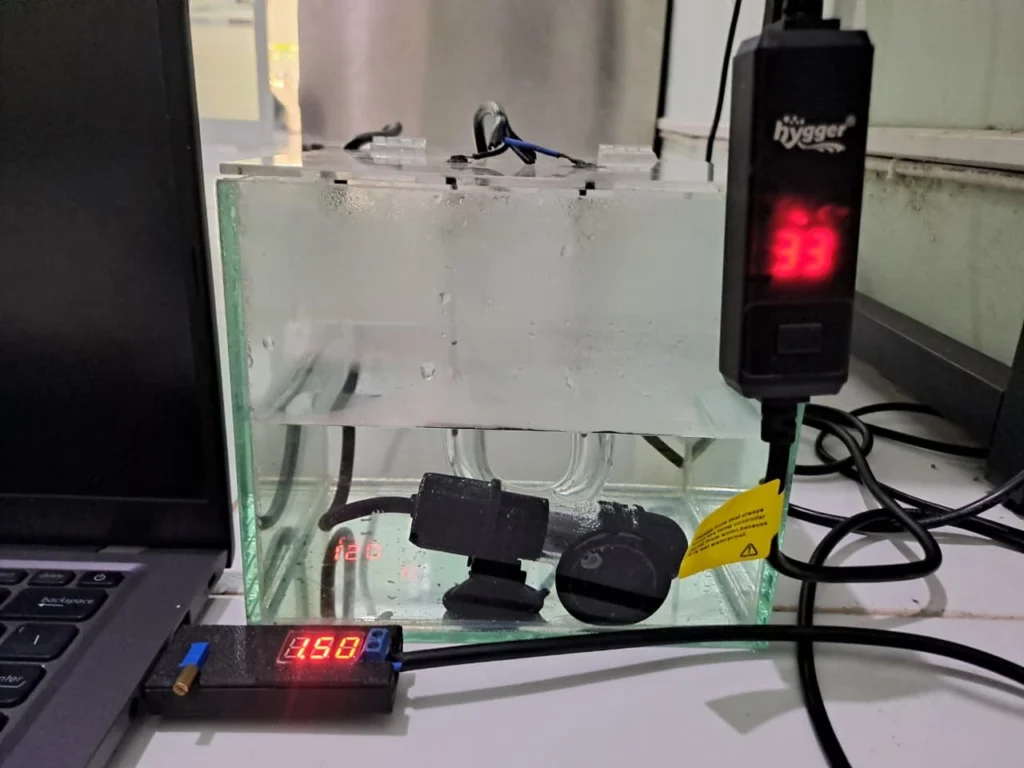
FIKKIA NEWS – Goats are a type of livestock that has become ingrained in Indonesian society. The existence of goats as a livestock rojo koyo has become a symbol of wealth as well as a promising source of food and economic resources. In an effort to address the challenges of the goat farming sector in Banyuwangi, a lecturer in Veterinary Medicine at the Faculty of Veterinary Medicine (FIKKIA) of Airlangga University, Dr. Amung Logam Saputro, M.Si., developed an innovative technology called Electric Separating Sperm (ESS)This technology is a solution to the imbalance in goat births.
Getting to Know ESS Technology
ESS is a device that electrically separates male and female sperm before artificial insemination (AI). This technology allows breeders to determine the sex of goat calves as needed. For example, in dairy goats, the focus is on producing productive female calves. In fattening goats, the focus is on producing faster-growing, marketable males.
ESS works by separating sperm based on their electrical charge and biological characteristics. X (female) and Y (male) sperm can be selected in a controlled manner before insemination. This technology is a form of spermatozoa sexing, a biotechnological method that is gaining popularity in Indonesia.
Local Ideas for Global Solutions
Dr. Amung Logam Saputro was inspired by the real needs of local farmers who struggled to control the sex of goat kids and manage their livestock's reproductive data. With a background in genetics and reproductive physiology, he designed the ESS as a solution that could be implemented directly in the field.
"Farmers need technology that's not only sophisticated, but also applicable and suited to local conditions. ESS was born from that spirit," said Dr. Amung.
Collaboration and Technology Support
To complement the ESS, Amung integrated a digital recording system based on the FANCHIP application. FANCHIP helps farmers accurately record reproductive data, marital status, and the sex of goat calves. He also initiated this FANCHIP for community service activities last year. This collaboration involves students in the Independent Learning Campus (MBKM) scheme, strengthening synergy between academics and the community. Furthermore, this program supports the achievement of the university's Key Performance Indicators (KPIs) through concrete solutions to local community problems.
More than just a transfer of knowledge, this program reflects the synergy between the university and the community in creating innovations that can have a real impact. Farmers are equipped not only with tools but also with the knowledge and skills to manage their livestock independently.
With this spirit, Airlangga University, through FIKKIA, remains committed to providing science-based solutions and engaging directly with communities that can have a broad impact. Ultimately, advanced animal husbandry isn't just about technology, but also about people who can manage it wisely and effectively.
Author: Amalia Sofi Ramadanti
Editor: Avicenna C. Nisa