



FIKKIA NEWS – Study Program Students Aquaculture FIKKIA Airlangga University with Blue Triangle Conservation (BTC) successfully won an award Best of The Best Community in the water category at the event Bumi Berseru Fest. The BTC team is carrying out a coastal ecosystem rehabilitation program by replanting seagrass in Prancak Village, Sepulu District, Bangkalan, Madura from December 2025 to January 2026. This collaborative activity between youths received support from Telkom Indonesia through the Telkom Sustainability program.
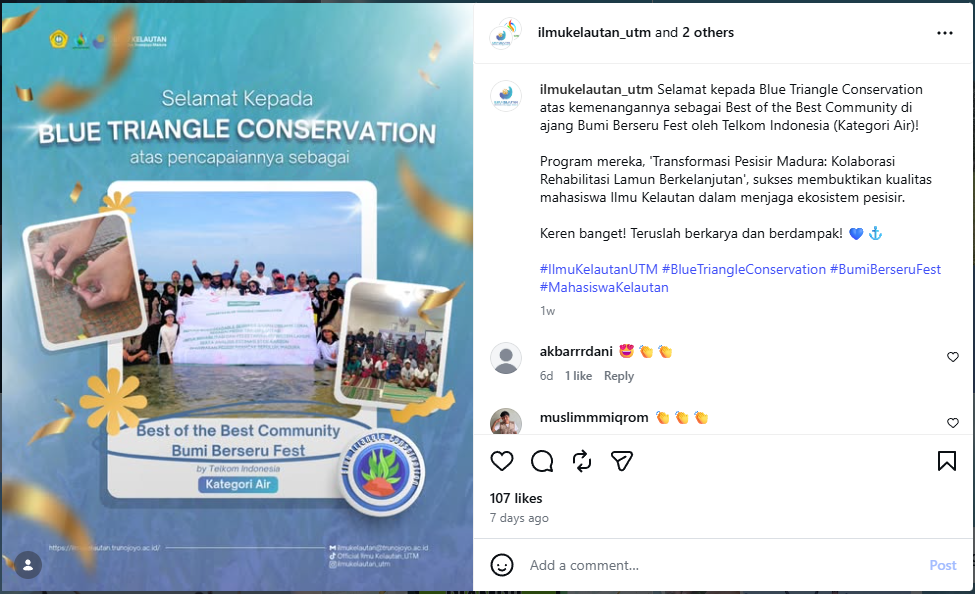
The news was officially announced via the Instagram account @ilmukelautan_utm on Monday (27/4/2026). Regarding this achievement, the FIKKIA NEWS team conducted an interview with Akbar Maula Dani (Aquaculture 2025), one of 15 volunteers selected from over 200 applicants. The volunteers come from various universities, including UIN Sunan Ampel Surabaya, Trunojoyo University, Madura, Surabaya State University, and the Surabaya State Electronics Polytechnic. The Senyum Desa Indonesia community service community also participated in the seagrass conservation activities.
"BTC conservation activities focus on preserving coastal ecosystems, particularly the protection and restoration of marine ecosystems, particularly mangroves, seagrass beds, and coral reefs," Dani explained.
Seagrass for Life
Environmental conservation focused on seagrass ecosystems is carried out through various environmentally friendly planting methods. Seagrass planting is carried out using pouch burlap sacks. The bags are then placed in a natural fiber medium, preventing sediment from easily dislodging and supporting the initial growth phase.
Furthermore, the method used was longline planting. This planting technique utilizes ropes suitable for flowing waters. The team also used coconut fiber plates to help stabilize the seagrass roots during growth.
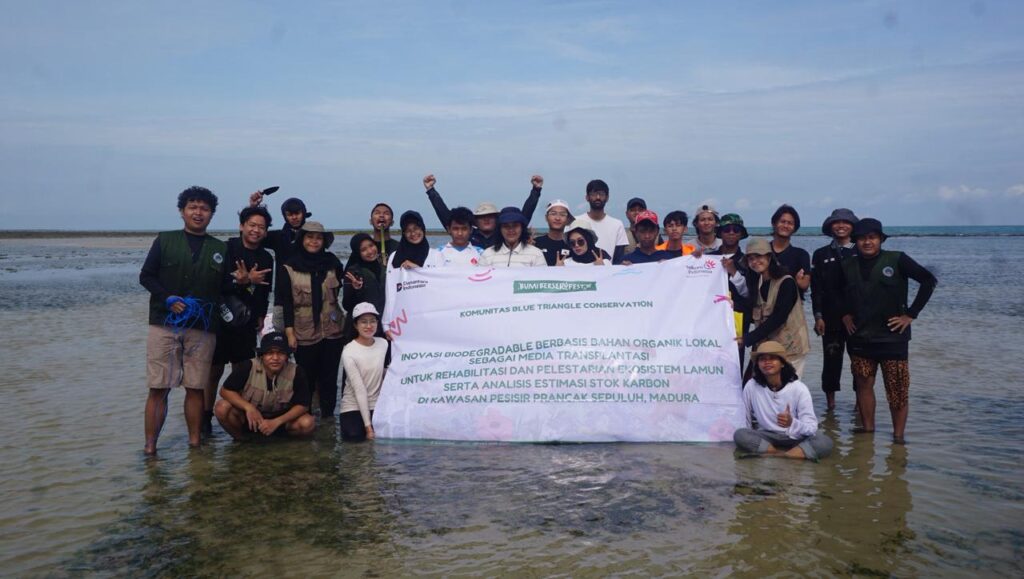
"All volunteer"We are directly involved in planting seagrass as a form of contributing to maintaining and restoring marine ecosystems," he said.
He also said that through his involvement in this activity, he and his team contributed to preserving the marine ecosystem and reducing the impact of climate change.
Supporting the Sustainability of the Blue Economy
In addition to playing a role in maintaining aquatic ecosystems, this activity also has a positive impact on the economy of coastal communities, particularly through increasing public awareness and participation in the sustainable management of marine resources.
Seagrass planting is carried out to ensure the ecosystem functions optimally. Seagrass supports the sustainability of marine life, such as fish and other organisms. The arrival of fish ultimately has the potential to increase fishermen's catches and maintain the long-term balance of the coastal ecosystem.
Seagrasses are a vital component of coastal ecosystems. They serve as spawning grounds, feeding grounds, shelter, and refuge for various coastal organisms, including fish and shellfish, which have high economic value. Furthermore, seagrasses also function in sediment stabilization and improving water quality by aiding in the carbon cycle.
"The loss of seagrass can cause seawater to become cloudy, marine life to lose their habitat, fishermen's catches to decline, and trigger the release of carbon into the atmosphere, which exacerbates climate change," he said.
At the end of the interview, Dani expressed his hope that conservation activities like this would continue and that more people would care about marine ecosystems. He also encouraged students to participate in similar activities, as they not only provide experience and expand their network, but also have a positive impact on the environment.
Author: Sabitha Helmi
Editor: Avicenna C. Nisa


