FIKKIA NEWS – The Faculty of Health, Medicine, and Natural Sciences (FIKKIA) Airlangga University collaborates with Shrimp Club Indonesia (SCI) Banyuwangi Branch, Technology Forum (FORTEL), and Indonesian Conservation held a Vannamei Shrimp Health Management Laboratory Workshop.
The event took place on Saturday, September 12, 2026, at the Giri FIKKIA UNAIR Banyuwangi Campus. Thirty-five participants, including cultivators, practitioners, and academics, attended.
The workshop discussed the prevention, early detection, and management of diseases in whiteleg shrimp. Participants also gained practical experience in laboratory diagnostics to support data-driven shrimp health management.
The activity involved the Head of SCI Banyuwangi Branch Ir. Yanuar Toto Rahardjo, Head of FORTEL David Wijaya Tjoek, lecturer of the Aquaculture Study Program FIKKIA UNAIR Arif Habib Fasya, S.Pi., MP, and the Indonesian Conservation team.
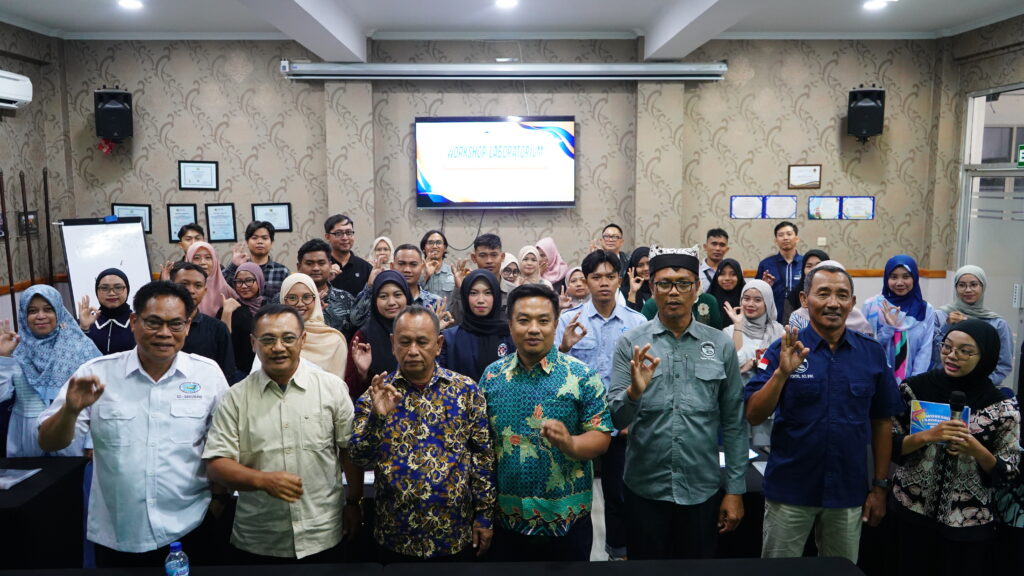
"Through this workshop, we want to equip farmers with hands-on laboratory diagnostic skills so they can detect and prevent the spread of shrimp diseases early," said the Head of the Activity Committee, Arif Habib Fasya, S.Pi., MP.
Discussing Water Quality to Disease Epidemiology
The first presentation, delivered by Ir. Yanuar Toto Rahardjo, focused on interpreting water quality data in vannamei shrimp cultivation. The presentation discussed analyzing water quality parameters as part of efforts to prevent shrimp health problems.
Furthermore, SCI Technical Advisor Ir. Suprapto discussed the health management of shrimp and fry. He also introduced microscopic diagnostics to help monitor shrimp health.
The next material was delivered by Sidrotun Naim, MPA, Ph.D. regarding PCR applications, sequencingand Antimicrobial Resistance (AMR) in shrimp farming. This method can be used to support the pathogen detection and identification process.
Meanwhile, Arif Habib Fasya, S.Pi., MP, discussed disease epidemiology in shrimp farming. The material covered disease spread patterns and the implementation of biosecurity strategies in the pond environment.
"This collaboration between practitioners, cultivators, and academics is an effort to bridge laboratory research with real-world challenges," said Ir. Yanuar Toto Rahardjo, Head of the Banyuwangi SCI Branch.
Diagnostic Practice Participants in the Laboratory
In addition to receiving material, participants participated in hands-on laboratory practice. The practice included microscopic diagnostics and technical observations related to shrimp health and disease.
The practical activity provides participants with the opportunity to observe the diagnostic process firsthand. This knowledge can serve as a foundation for monitoring shrimp health in aquaculture units.
Through the workshop, FIKKIA UNAIR, along with its collaborative partners, brought together the perspectives of academics, practitioners, and farmers. The collaboration aimed to strengthen the use of science and technology in vannamei shrimp health management.
Author: Farra Azzahrani
Editor: Avicenna C. Nisa