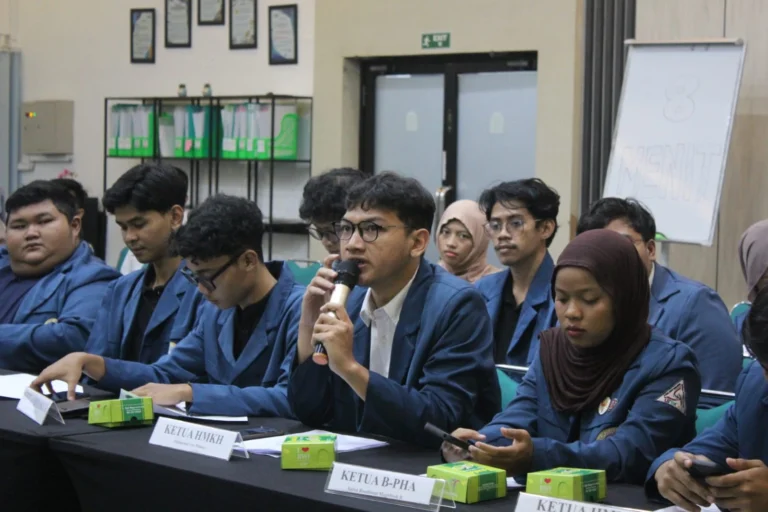
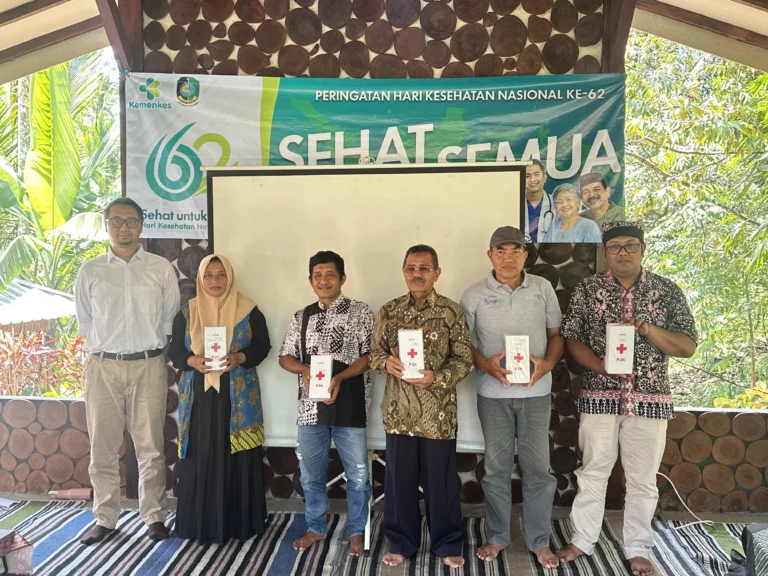
FIKKIA NEWS – Health management is an important aspect in maintaining the sustainability of vaname shrimp cultivation (Litopenaeus vannamei). Its implementation needs to be carried out from the selection of fry to the maintenance period in the pond. This was discussed in the Laboratory Workshop which featured a Technical Advisor. Shrimp Club Indonesia (SCI) Banyuwangi, Ir. Suprapto. The activity took place on Saturday (September 12, 2026) and was attended by 35 participants consisting of fish farmers, laboratory assistants, and technicians.
Inspection of Fry Before Spreading
In his presentation, Ir. Suprapto explained the importance of checking the quality of the fry before releasing them into the ponds. This can be done through microscopic observation in a mini-laboratory.
Some indicators that can be observed include the presence of fat granules (lipid droplets) in the hepatopancreas. These energy reserves are needed by the fry after the distribution process.
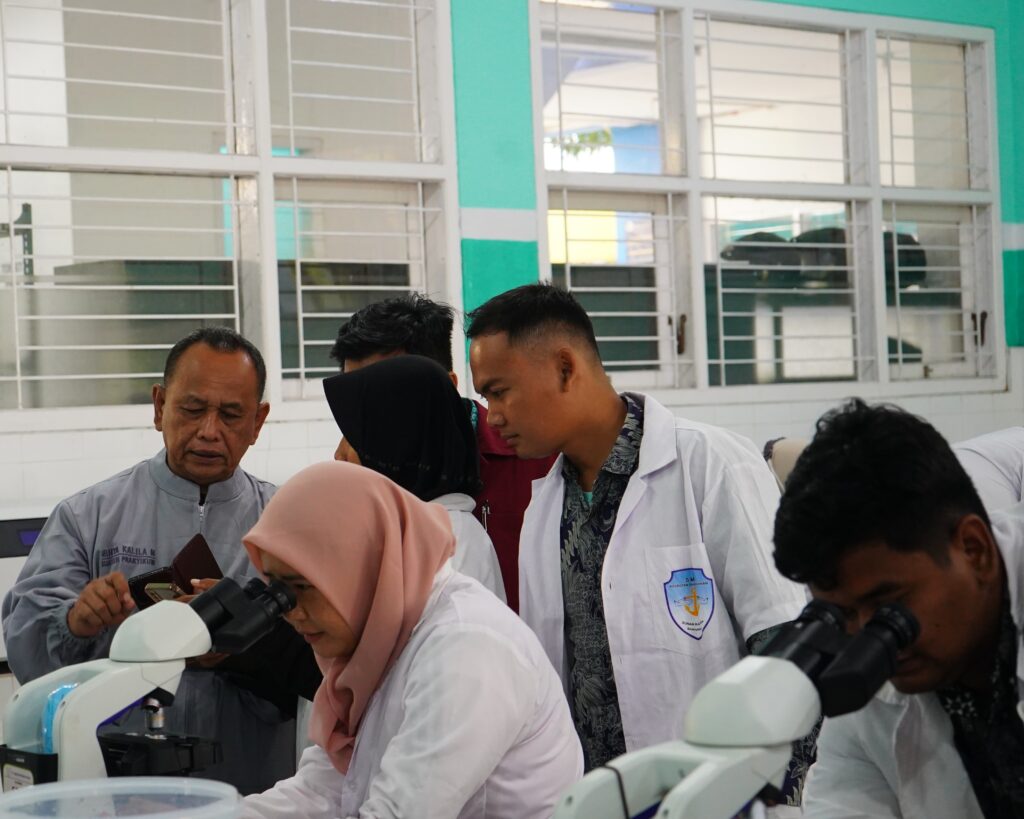
The condition of the digestive tract is also part of the examination. Healthy fry have a digestive tract filled with feed.
In addition, participants were introduced to the observation of the muscle thickness ratio to the digestive tract (Muscle-Gut Ratio/MGR). Ir. Suprapto stated that an MGR value of at least 3:1 in the sixth segment can be an indicator in examining the condition of the fry.
The examination also includes the condition of the tissue and the presence of organisms attached to the body of the fry. Necrosis and epicomensal organisms such as protozoa and ciliate need to be considered because it can harm the health of the fry.
Acclimatization Before Fry is Released
The acclimatization process is a crucial step before the fry are introduced into the pond. Acclimatization involves gradually adjusting the temperature and salinity using a container equipped with aeration.
“When the spreading process takes place, temperature and salinity acclimatization in an aerated container is a mandatory procedure to prevent environmental shock (environmental shock) on post-larvae," explained Ir. Suprapto.
He also explained the importance of preventing water from entering the main pond from the seed transport bags. This step is taken to reduce the risk of pathogens or contaminants entering the hatchery environment.hatcheries).
Three Pillars of Shrimp Health Management
After stocking, regular monitoring of the shrimp and the environment is necessary. Observations can be made using anco, daily growth measurements, or Average Daily Growth (ADG), as well as examination of the condition of shrimp organs.
Ir. Suprapto explained three aspects that need to be considered in shrimp health management: water quality stability, feed management, and environmental microflora management.
First, water quality must be maintained to ensure stability. Sudden changes in pH and temperature can cause stress to shrimp and affect their condition.
See also: SCI Banyuwangi and FIKKIA Discuss the Importance of Precise Water Quality Data for Vannamei Shrimp Cultivation
Second, feed management needs to be tailored to the shrimp's needs. feed additives, such as vitamin C, minerals, and beta-glucan, can be part of a feed management strategy according to cultivation needs.
Third, environmental microflora management can be achieved through the use of probiotics. Their application must be tailored to the pond conditions and the objectives of microorganism management.
In addition to environmental monitoring, microscopic examinations of organs such as the gills and hepatopancreas can be performed periodically. The results of these observations can be used to evaluate the shrimp's health.
Through this material, participants gain an overview of the stages of shrimp health management, starting from examining the fry, acclimatization, to monitoring the condition of the shrimp and the environment during maintenance.
Author: Farra Azzahrani
Editor: Avicenna C. Nisa