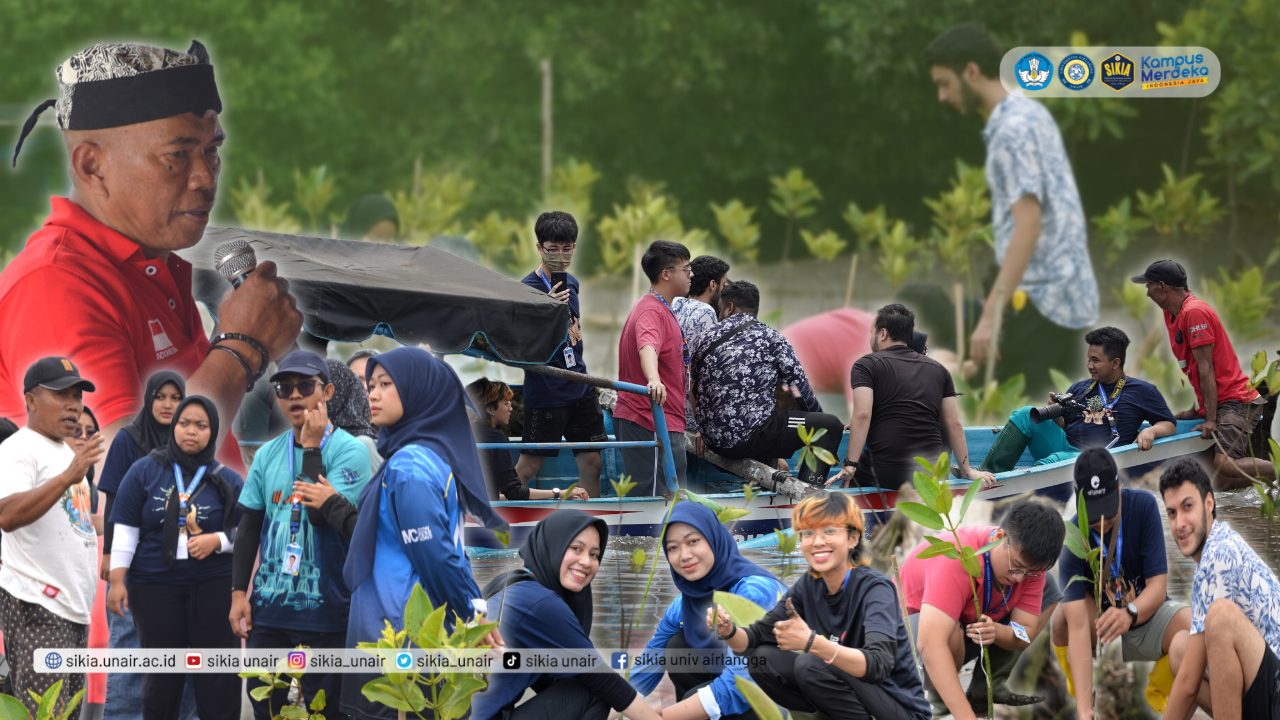
SIKIA NEWS SIKIA Aquaculture Study Program currently holding the HIMAKUA Integration program. The integration program entitled Restoration Coral Reefs and Mangroves in Banyuwangi was held for three days (14-16/9/2023). Ten students from UCSI Malaysia and University Malaya Malaysia, along with Aquaculture lecturers, and 30 students who are members of the HIMAKUA organization were directly involved in mangrove planting activities at Cemara Beach, Banyuwangi. HIMAKUA SIKIA collaborating with Pokdarwis Pantai Cemara as conservation area manager. A total of 50 mangrove seedlings of the Rizhopora type were successfully planted at the estuary of Cemara Beach. The HIMAKUA Integration Program is proof of SIKIA UNAIR's commitment to realizing it 14th SDGs Life Bellows Water.
Community service participants were previously provided with knowledge about planting mangroves properly on the coast. Planting mangroves is an international community service agenda that has been scheduled by the Aquaculture Study Program for 2023.
Mangrove Restoration Coordinator Dwi Retna Kumalaningrum, S.Pi., MP conveyed that this activity was a manifestation of the younger generation's concern about the importance of the mangrove ecosystem. Mangroves as plant vegetation have a role in maintaining aquatic ecosystems. Apart from that, the presence of mangrove roots is useful in preventing erosion of coastal areas.
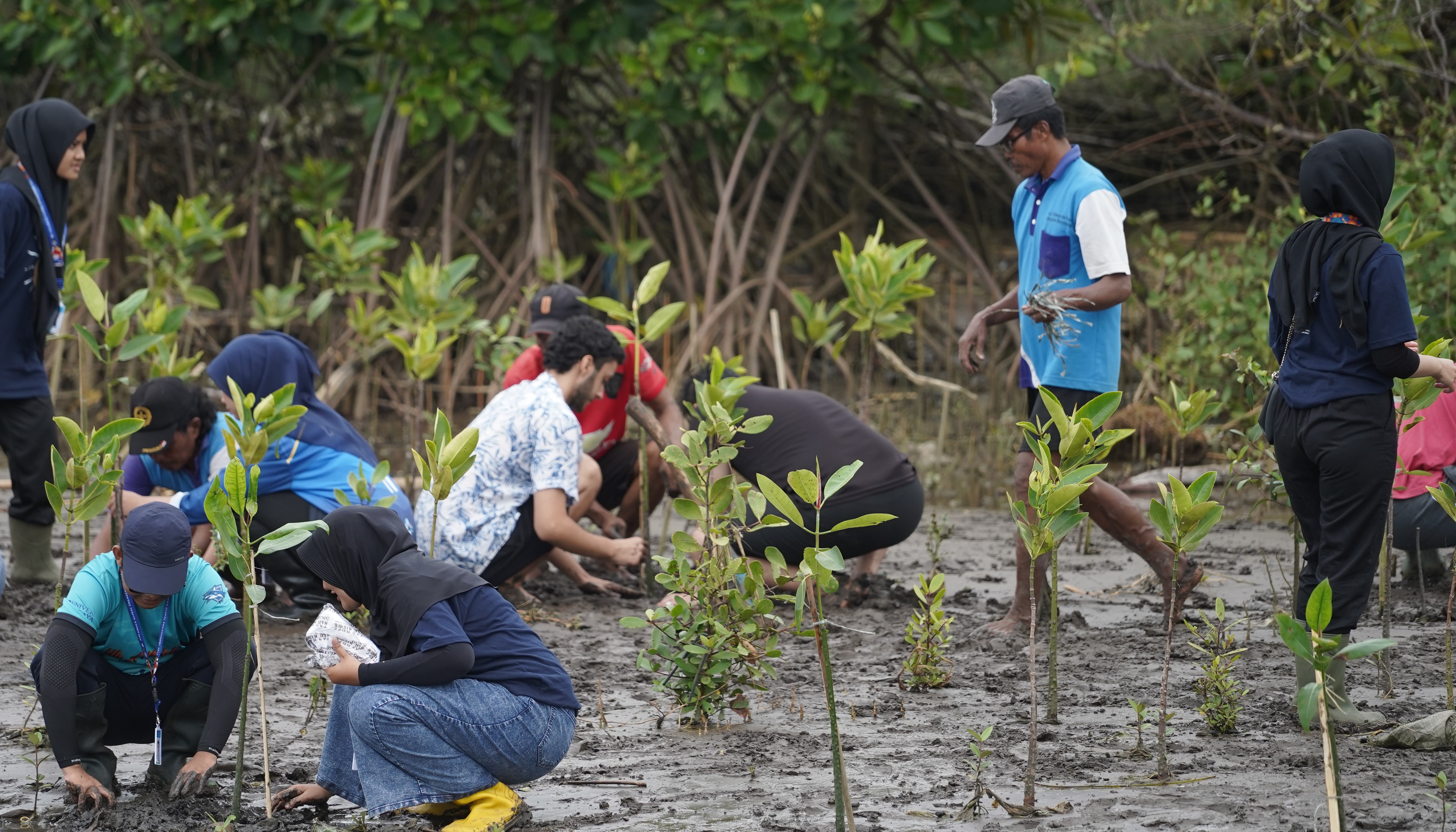
Providing information on how to plant mangroves by Pokdarwis
Mr Sampur together with the Tourism Awareness Group Team (Pokdarwis) also provided and accompanied the Integration participants. They teach how to plant mangroves properly and correctly. Considering that the root condition of mangrove seedlings is still weak, special treatment is needed so that the plants are maintained. Newly planted mangrove seedlings must be supported by bamboo or wood. The buffer functions to withstand waves or water currents coming from the sea and rivers.
The mangrove ecosystem plays a role in maintaining the balance of the underwater ecosystem. The hanging mangrove roots provide space for fish and swamp animals to live and breed in it. These marine organisms use mangrove roots as a home and shelter from natural predators. Local fishermen no longer need to go far out to sea to find fish.
It is hoped that the mangrove planting activity can help restore the mangrove forest ecosystem in the Cemara Beach area. The location of Cemara Beach faces the Bali Strait which is known to have strong waves and ocean currents. Therefore, mangrove forest restoration really supports natural succession as well as a sea wave protection belt. Apart from that, this activity can increase students' awareness of caring about the sustainability of aquatic ecosystems. So that future generations can continue to see and enjoy the beauty of nature. The first day of restoration activities closed with a boat ride around to see the mangroves that had been successfully conserved. Participants don't forget to stop by the turtle hatchery which is located in the same location as Cemara Beach.
Author: Avicenna C. Nisa
Editor: Beautiful Jasmine