


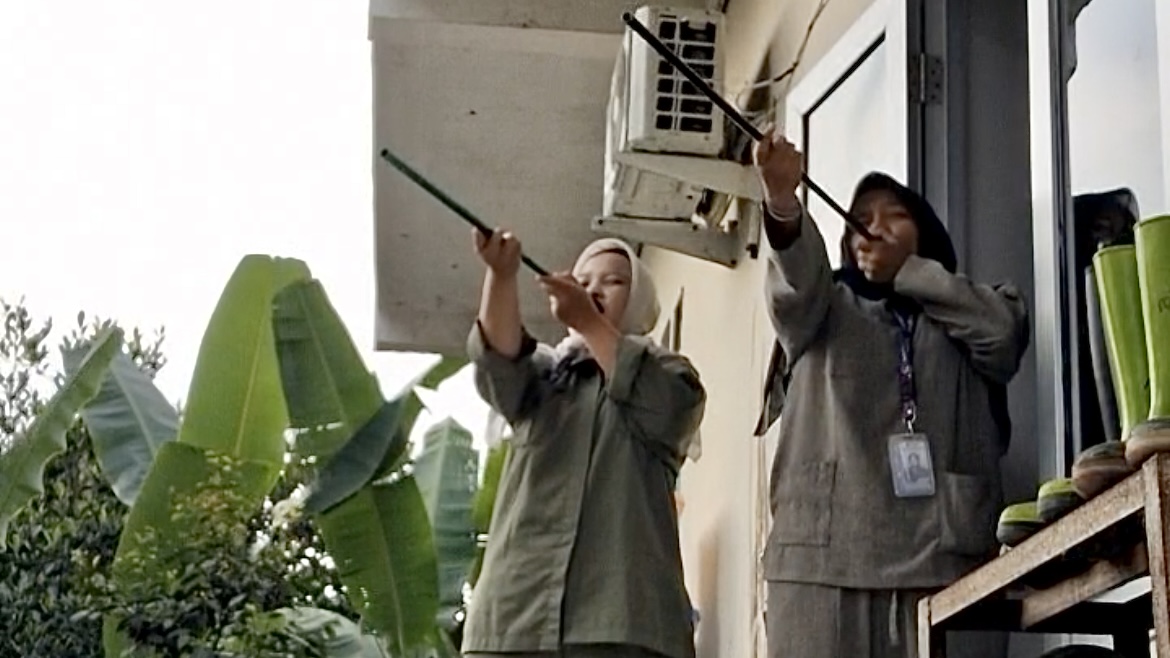
FIKKIA NEWS – Two students of the Veterinary Professional Program (PPDH) of the Faculty of Health, Medicine, and Natural Sciences (FIKKIA) Airlangga University are studying the technique of using a hood (tulup).blowpipe) while undergoing an internship at Indonesian Rehabilitation Nature Initiative Foundation (YIARI), Bogor. For one month (June 24-July 24, 2026), Putri Laura Faradina and Ragil Ayu Pangastutie studied various medical procedures on wildlife. Interestingly, they also learned how to administer medication remotely using a tulup.
Learning Medication Administration Techniques from a Distance
The learning session was led by Dr. Imam Arifin, a veterinarian at YIARI Bogor Animal Management. He explained the basic principles of using a hood as a method of administering medication without direct contact with the animal. This technique is widely used in wildlife medicine practices. Its use helps reduce animal stress while minimizing the risk of injury to both the animal and the staff. Hoods are commonly used to treat animals that are aggressive, sensitive to handling, or in hard-to-reach locations.
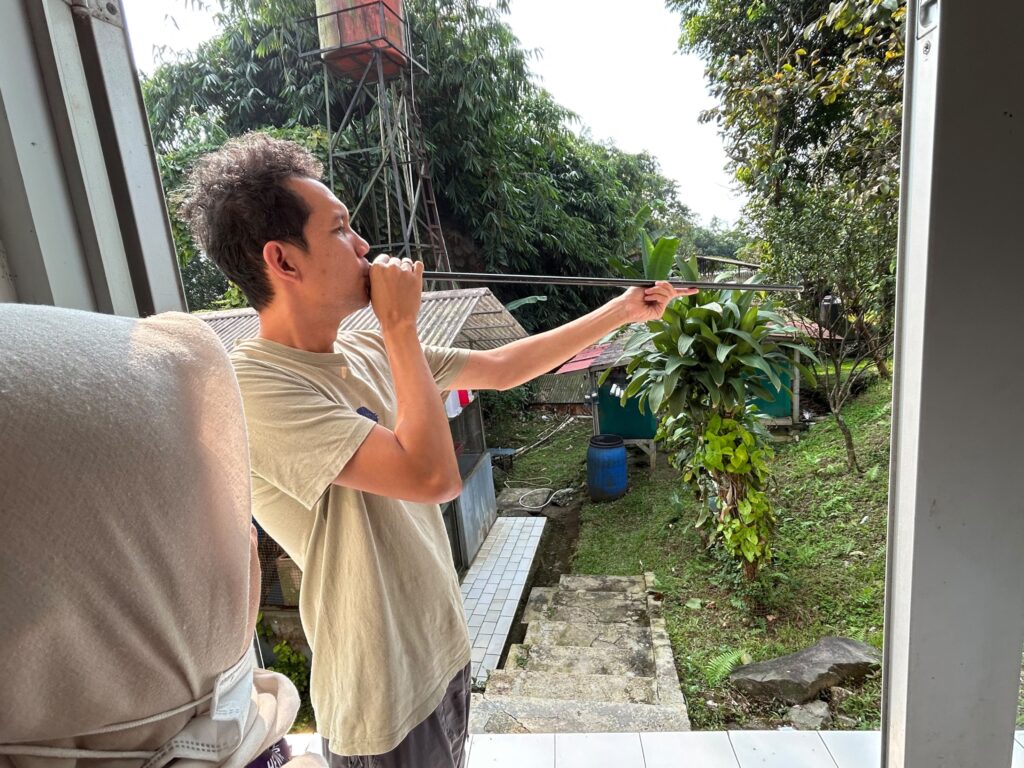
Participants learn the function of each component of the tool, starting from blowpipe, dart, needle, stabilizer, stopper, to the drug storage room. They were also introduced to various types of drugs that can be administered through dartThese medications include anesthetics, antibiotics, and other therapies as needed by the animal.
Tulup Shooting Practice
In addition to theory, students participated in practical shooting at practice targets at a distance of approximately five meters. Each participant received several opportunities to practice. The instructor then evaluated their accuracy, aiming accuracy, and blowing technique.
This training aims to improve consistency, air pressure control, and precision in equipment use before applying it to field conditions. According to Dr. Imam, prospective veterinarians need to understand wildlife handling techniques from the start of their training.
"Students need to learn wildlife handling techniques to equip them with the skills to understand wildlife medical practices and their direct application in the field," he said.
He explained that using a hood can facilitate the administration of anesthesia and antibiotics without direct restraint. This technique also promotes safer animal capture and reduces the risk of stress and trauma.
Through this internship, PPDH FIKKIA UNAIR students gained practical experience in using hoods in wildlife management. Learning with YIARI veterinarians is expected to strengthen the competency of prospective veterinarians in handling wildlife safely and effectively while prioritizing animal welfare principles.
Author: Princess Laura Faradina
Editor: Avicenna C. Nisa


