

FIKKIA NEWS – The STEER East Java 2026 series continued on Wednesday (July 29, 2026) with field learning at the Muncar Beach Fishing Port and Mount Ijen, Banyuwangi. Together with medical students from the Faculty of Health, Medicine, and Natural Sciences (FIKKIA) as well as Faculty of Medicine Airlangga University, delegation Department of Biomedical Engineering National University of Singapore (NUS) studying the various health challenges encountered in coastal and mountainous areas.
Both locations were chosen to provide first-hand experience regarding the implementation of Travel Medicine in various environmental conditions. Through field observations, participants are encouraged to understand that travel health is not solely focused on tourists, but also relates to the health of local communities, environmental conditions, and occupational safety at the destination.
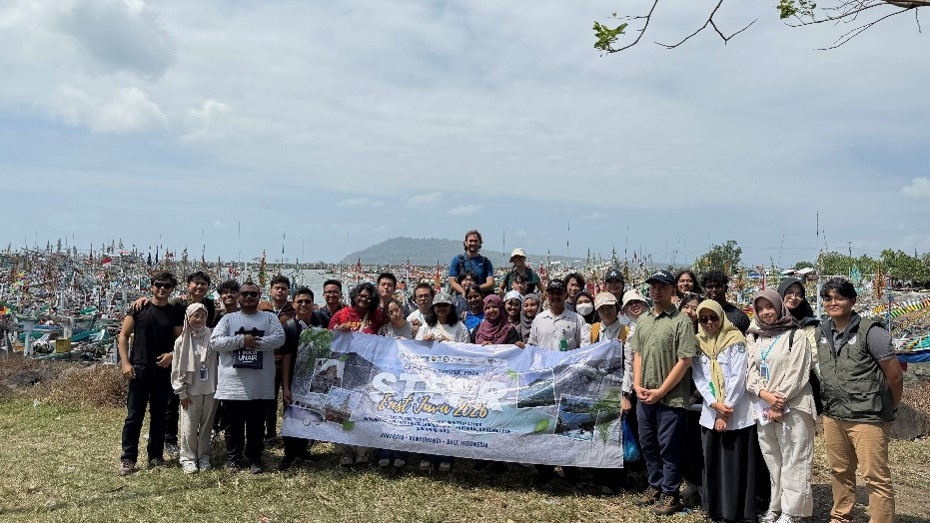
Assessing Coastal Community Health in Muncar Port
The Muncar Coastal Fishing Port served as the first learning location, as it is one of the largest fishing ports in Indonesia. Here, participants observed the relationship between environmental health, port sanitation, and occupational safety and health in coastal communities.
Students observed port activities, discussed with the Muncar Coastal Fisheries Port Technical Implementation Unit (UPT), and interacted directly with the fishing community. Through these activities, participants gained an understanding of regional sanitation management, the health risks associated with fishing activities, and the challenges coastal communities face in maintaining health and productivity.
For NUS Biomedical Engineering students, this visit was an opportunity to identify real needs in the field as a basis for developing technological innovations that can support the safety of workers and coastal communities.
Understanding the Health Risks at Mount Ijen
The learning then continued in the Mount Ijen area, a natural tourist destination characterized by extreme environmental characteristics. During the climb, participants observed various health risks potentially faced by tourists and residents working in the area.
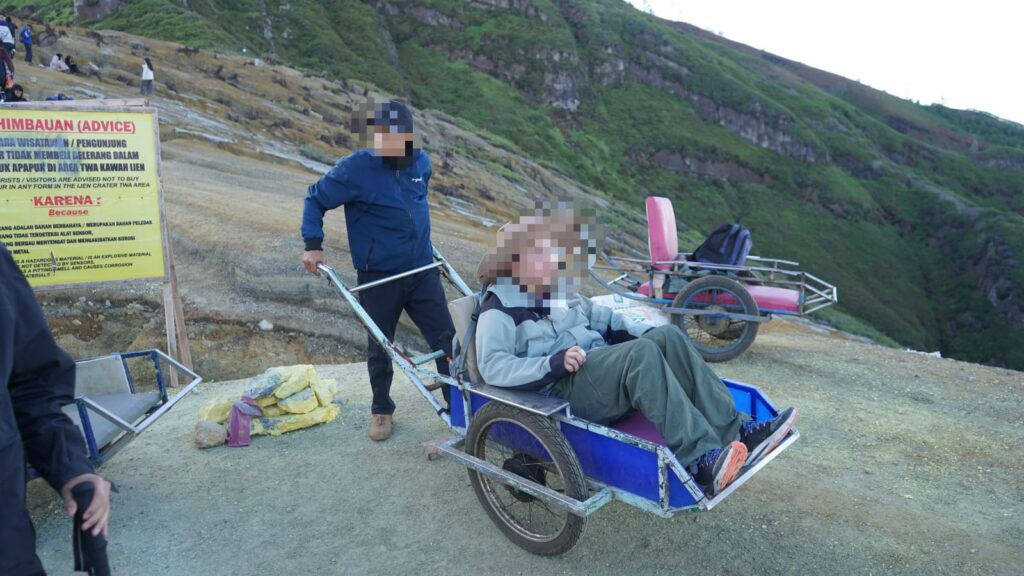
Participants also conducted interviews with sulfur miners and trolley operators known as “Lamborghini Ijen”The discussion provided an overview of the occupational health challenges resulting from exposure to sulfur gas, the physical workload, and the various adaptations people make to their daily activities.
The observation series concluded with a discussion with officials from the Natural Resources Conservation Agency (BKSDA). During the session, participants received explanations about conservation area management, visitor safety aspects, and environmental preservation efforts that support the sustainability of tourist destinations.
One of the NUS delegates, Yong Yan, admitted to gaining a new perspective after participating in field learning in Banyuwangi.
"This experience has opened our eyes to the fact that technological innovation is not only needed in hospitals, but also to support the safety of workers and tourists in extreme environments," he said.
Through learning in coastal and mountainous areas, students from Airlangga University and the National University of Singapore gained an understanding that each environment presents unique health challenges. This experience is expected to equip them to develop innovative solutions that support the safety of communities and travelers, while strengthening international collaboration in the field. Travel Medicine and support the achievement of SDGs points 3, 9, and 17.
Author: Cantika Anggun Roudhotul Al Zahra
Editor: Avicenna C. Nisa