


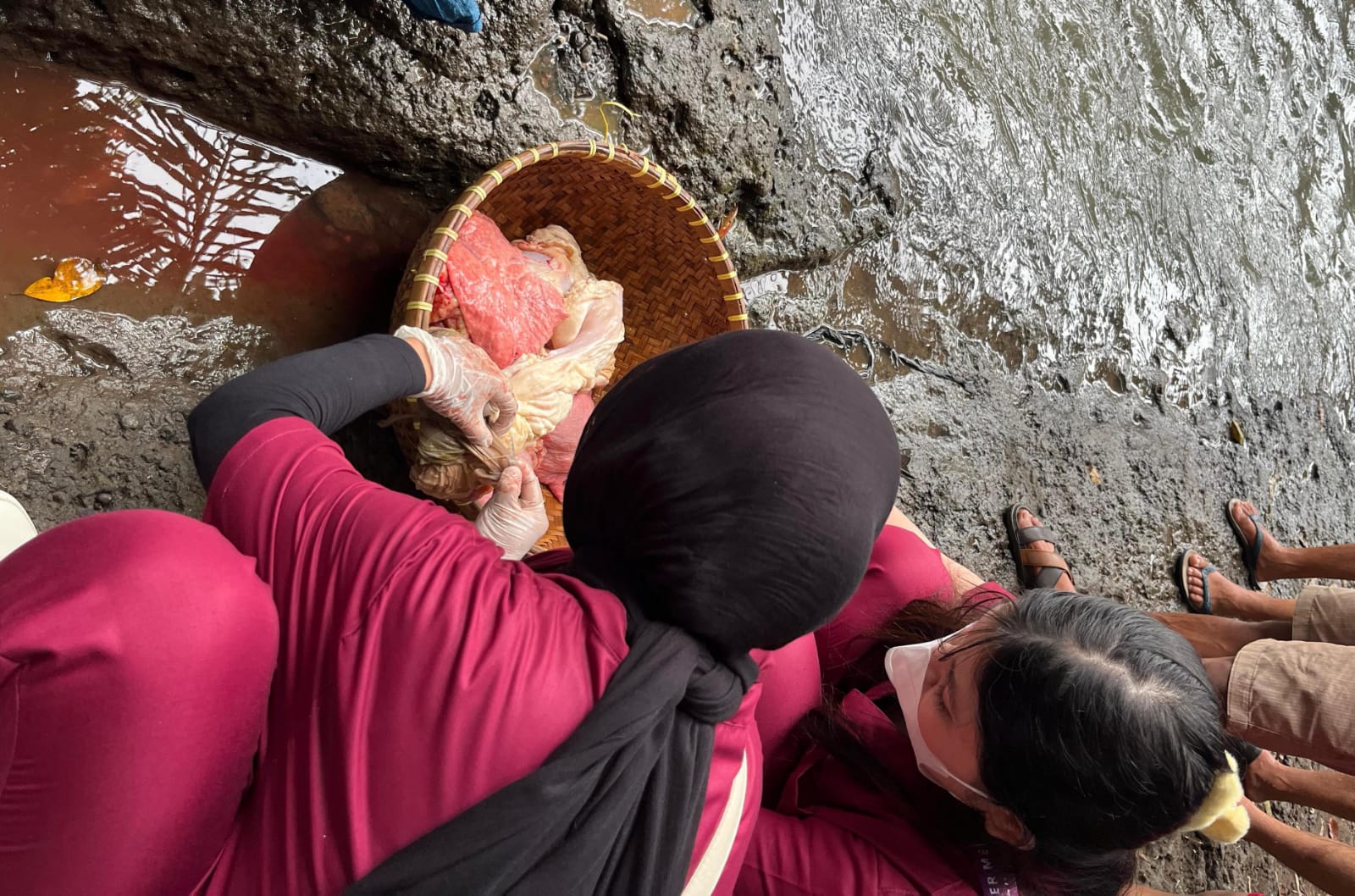
FIKKIA NEWS – The momentum of Eid al-Adha 1447 H is an opportunity for devotion for Veterinary Medicine students FIKKIA Airlangga UniversityTogether with veterinarians in Banyuwangi Regency, they directly inspected sacrificial animals to ensure the meat consumed by the public was safe, healthy, and free from zoonotic diseases.
The Veterinary Medicine Student Association (HMKH) FIKKIA UNAIR deployed 52 students to support the examination of sacrificial animals. They collaborated with 34 veterinarians working in various sub-districts in Banyuwangi. This activity was carried out in collaboration with Department of Agriculture and Food Banyuwangi Regency and the Indonesian Veterinary Medical Association (PDHI) East Java Branch IV. Antemortem inspection was carried out just before the animals were slaughtered on Wednesday (27/05/2026) assisted by the committee at each location.
Students and veterinarians conducted examinations in several areas, including Banyuwangi, Rogojampi, Kabat, Kalipuro, and Licin districts. A total of 282 sacrificial animals were examined, consisting of 92 cows, 147 goats, and 43 sheep.
Perform Antemortem and Postmortem Examination
The inspection is carried out in two stages: antemortem and postmortem. Antemortem inspection is carried out before slaughter to ensure the health of the sacrificial animal.
At this stage, the team examines the animal's physical condition, behavior, and signs of diseases potentially transmissible to humans. In Kabat District, all sacrificial animals were declared healthy and fit for slaughter.
After slaughter, the team proceeded with postmortem examinations of the carcasses and internal organs. These examinations were conducted at slaughterhouses located in various mosques and prayer rooms.
The organs examined include the liver, heart, rumen, and spleen. This stage aims to detect abnormalities or diseases that are not visible while the animal is still alive.
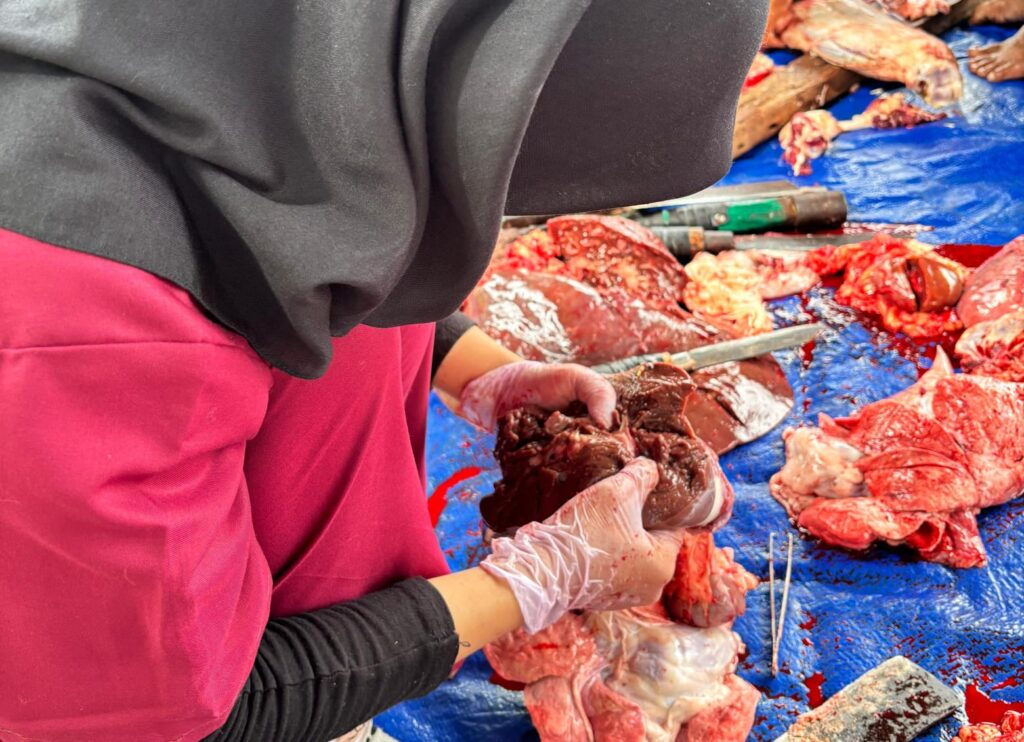
From the results of the examination, the team found that the cow's liver was infected with worms. fasciola sp. In accordance with veterinary public health procedures, the organs were immediately discarded to prevent public consumption.
These findings demonstrate the importance of postmortem inspection in maintaining the safety of animal-derived food.
"Thank you to the Banyuwangi Agriculture and Food Service and the FIKKIA Veterinary Medicine students who helped inspect the sacrificial animals. This activity ensures that the meat distributed is fit for consumption and safe from zoonoses," said Nur Salim, a member of the Kabat District sacrificial committee.
Learning While Serving the Community
Students' involvement in these activities provides valuable experience outside the classroom. They can apply their animal health knowledge directly while contributing to the community.
Through this field activity, students learn to recognize the health conditions of sacrificial animals, conduct organ inspections, and understand veterinary public health procedures.
"I am very happy to be able to serve the community and learn how to inspect sacrificial animals directly," said Salma Mufidah (KH 2024).
The collaboration between local governments, veterinarians, and students demonstrates the importance of synergy in maintaining public health. In addition to ensuring that the sacrifice is carried out according to Islamic law, this activity also helps prevent the spread of zoonotic diseases through animal products.
By inspecting hundreds of sacrificial animals, FIKKIA UNAIR students played a role in ensuring food security in Banyuwangi. Eid al-Adha 2026 became a moment not only steeped in religious values but also in community service and health education.
Author: Amalia Sofi Ramadanti
Editor: Avicenna C. Nisa


