


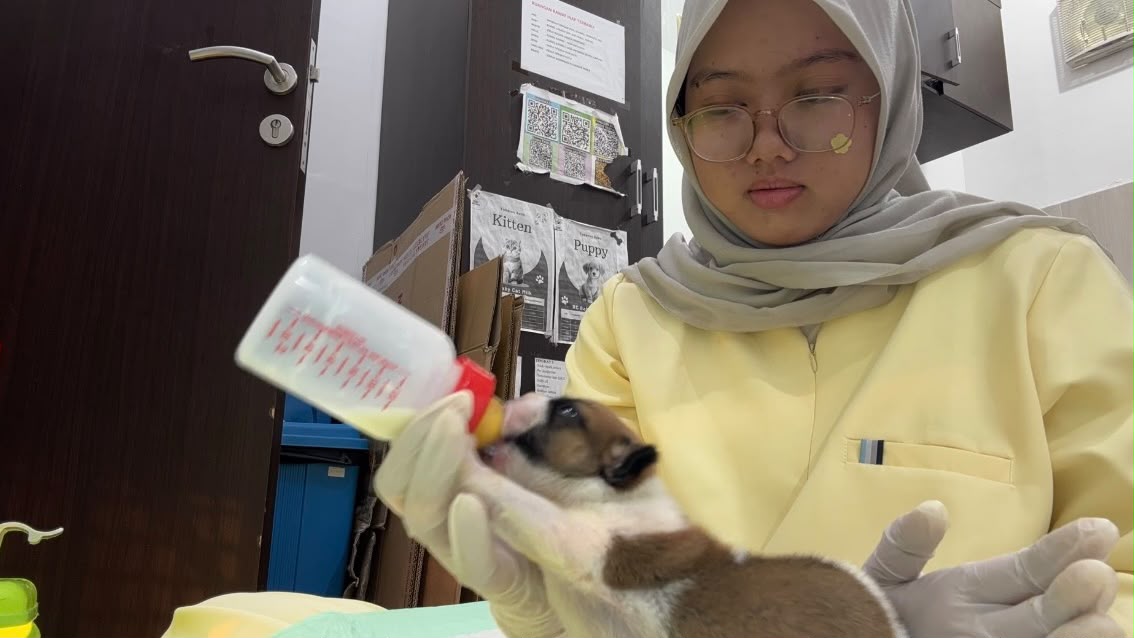
FIKKIA NEWS – Practical experience in animal health care facilities is an important part of developing the competency of prospective veterinarians. Through the internship program of the Indonesian Veterinary Students Association (IJAI),IMAKHI), students get the opportunity to learn clinical services directly.
One of the participants in the program is Atikah Zahra Harahap, a student of the Veterinary Medicine Undergraduate Program, Faculty of Health, Medical and Natural Sciences (FIKKIA) Airlangga University. Together with two Veterinary Medicine students from Syiah Kuala University (USK), Atikah participated in an internship at Zero Animal Clinic (ZAC), Palembang, South Sumatra. The program will run for 15 days, from July 13 to 27, 2026.
Internship at a Veterinary Clinic in Palembang
Zero Animal Clinic is a veterinary clinic in Palembang that provides general examinations, laboratory services, therapeutic procedures, surgery, inpatient care, grooming, and preventive services.
During her internship, the student, known as Kara, participated in training in several divisions: surgery, inpatient care, and grooming. Each division was studied for four to five days to familiarize participants with the service flow within each unit.
Students are also introduced to various medical equipment used in veterinary practice. This equipment includes: Abaxis for blood tests, Healvet for evaluation of organ function, infusion pump, USG, X-ray, Wood lamp, electroacupuncture, pet brooderand nebuliser.
Learning the Application of Electroacupuncture
During the internship, participants learn acupuncture therapy which is part of Traditional Chinese Veterinary Medicine (TCVM)Zero Animal Clinic uses electroacupuncture, a technique that combines the insertion of acupuncture needles with low-intensity electrical stimulation.
The course is conducted under the guidance of veterinarian Dr. Iwan Kurniawan, M.CVA., founder of Zero Animal Clinic. Students are introduced to the basic principles, indications, and techniques for applying therapy to patients' conditions.
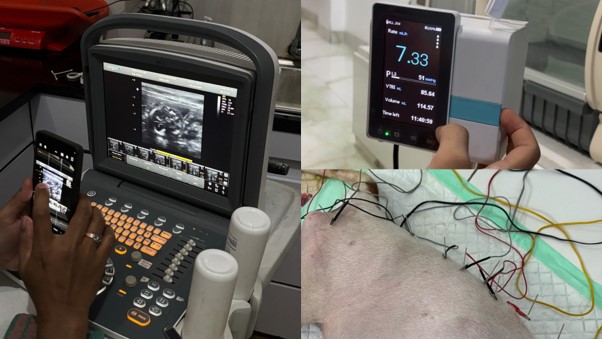
One case studied involved a domestic dog with scoliosis who experienced balance problems while walking. The patient underwent regular electroacupuncture therapy twice weekly.
Students also observed the handling of a french bulldog who suffered paralysis in both hind legs. The patient received electroacupuncture therapy for approximately 20 minutes using 16 acupuncture points spread across both legs and the spine, particularly the lumbosacral region. The therapy was combined with walking exercises as part of the rehabilitation process.
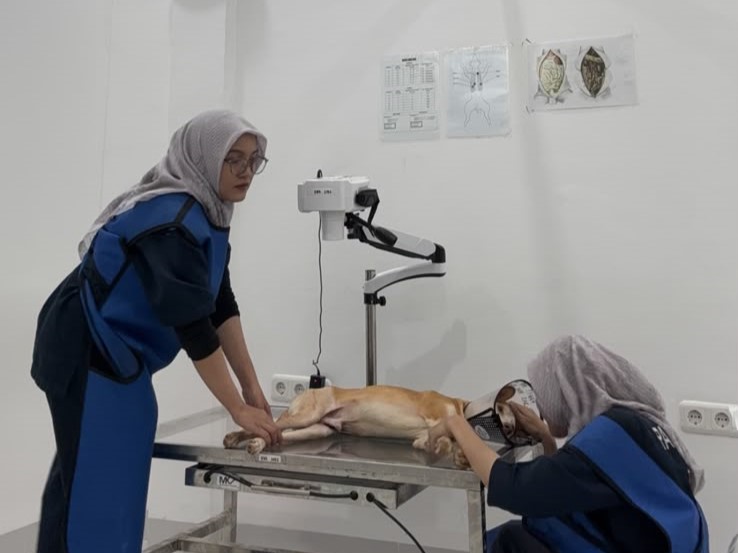
Through this internship program, students gain experience in clinical services, the use of medical technology, and the application of complementary therapies in veterinary practice. This experience is expected to strengthen students' competence in treating patients appropriately, safely, and in accordance with professional standards.
Author: Atikah Zahra Harahap
Editor: Avicenna C. Nisa


