


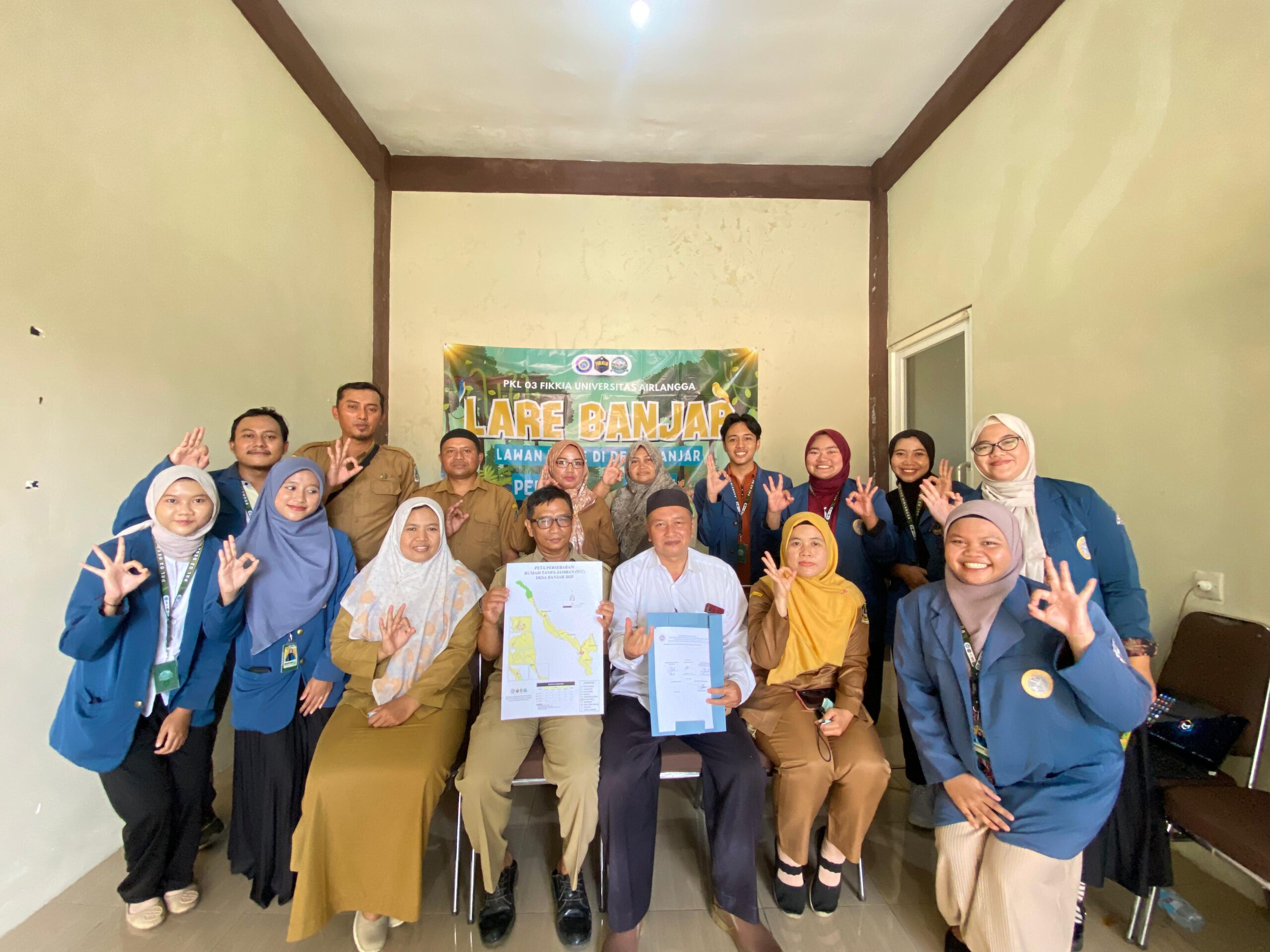
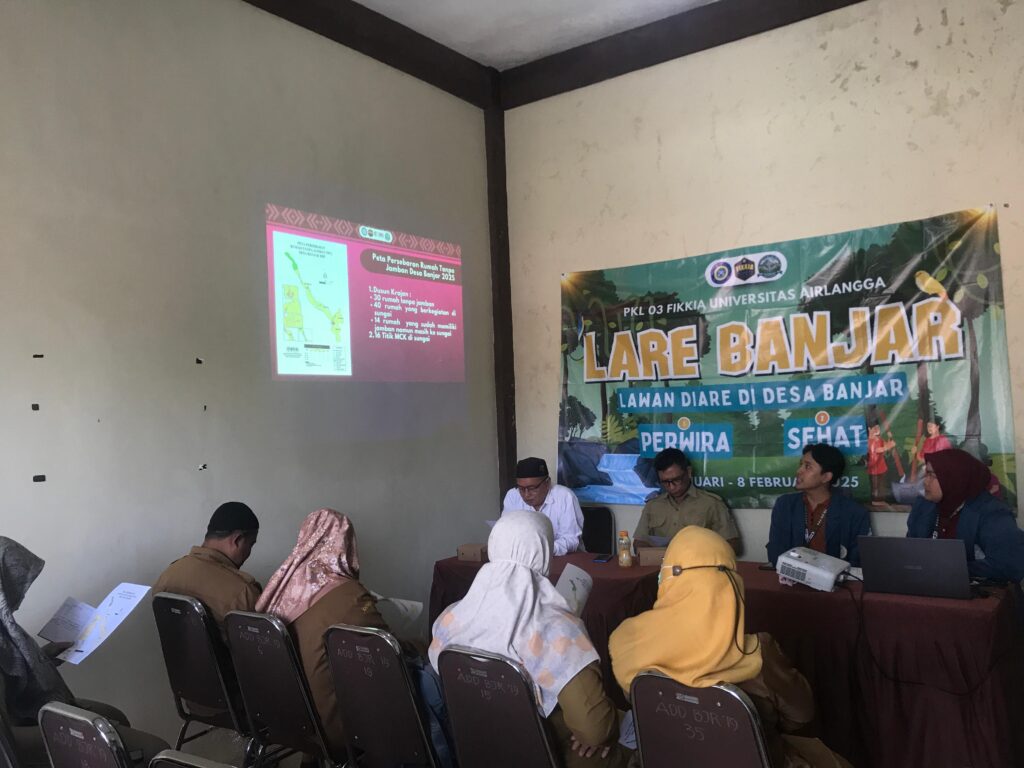
FIKKIA NEWS – PKL 03 Students of Public Health Study Program, Faculty of Health Sciences, Medicine, and Natural Sciences (FIKKIA) Airlangga University (UNAIR) carry out advocacy activities on the results of latrine ownership mapping and identification of diarrhea risk areas in Banjar Village. The activity aims to provide recommendations to village policy makers regarding strategic steps that need to be taken to improve the health of the community in the area.
The policy makers who attended included the Head of Banjar Village, Heads of Hamlets throughout Banjar Village, representatives of the Licin Health Center, and members of the Banjar Village Deliberative Body on Monday (03/02/2025). Advocacy was carried out based on the findings of a mapping survey conducted during January 2025.
Presentation of Survey Results
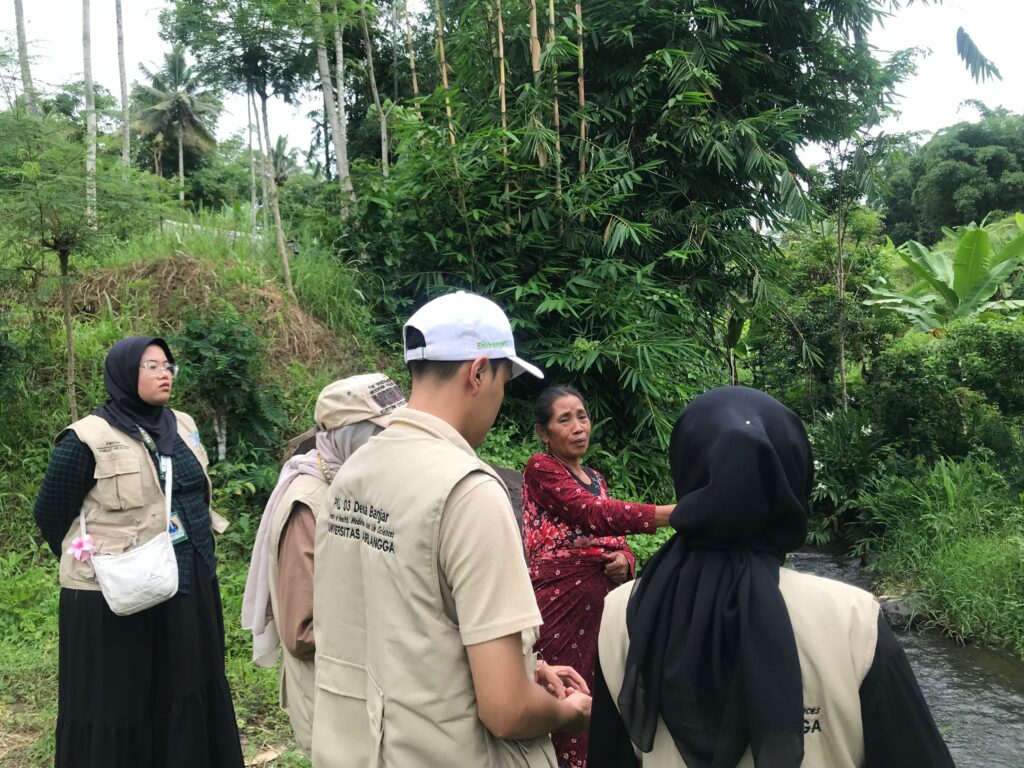
The survey results show that the condition of toilets in Banjar Village shows that there are 99 houses without toilets and 107 houses that still carry out activities in the river. The mapping results also recorded 29 MCK points spread across the river. This data was processed using the QGIS application to produce a visualization of the distribution map of houses without toilets in Krajan, Rembang, Salakan, and Putuk Hamlets.
The agreements that were successfully reached during the advocacy included the Village Government agreeing to provide assistance in the provision of private toilets and the construction of communal septic tanks for communities that do not yet have toilet facilities. In addition, public toilet facilities will be immediately built at MCK locations located on rivers, to reduce health risks due to the use of rivers as places to defecate.
It is also important to reactivate the Village Regulation that prohibits activities in the river and the disposal of feces into the river. Especially for people who already have independent toilets. Special attention is also given to poor elderly who live alone and in uninhabitable houses. The decision was taken to ensure that people can get access to decent toilet facilities.
The sustainability of the program is the focus of the Banjar Village HEALTH Working Group. It is important to monitor and update data regularly to ensure that sanitation conditions continue to improve. PKK Working Group 3 Banjar Village supports the development of products that can improve environmental cleanliness sustainably. These steps are expected to create a positive impact on public health in Banjar Village, especially in achieving sustainable development goals related to health and sanitation.
Policy Based on Data Analysis
Aenul Ropik, Secretary of Banjar Village, expressed his appreciation for this advocacy activity. According to him, the village government was greatly helped in getting updated data on latrine management.
“This also provides a strong basis for us in making decisions and policies for better public health improvement in our village,” Ropik said during advocacy.
The activities in this article are the implementation of SDGs point 3 values. Good Health and Well-Being and point 6 Clean Water and Sanitation.
Author: Muhammad Ridwan
Editor: Avicenna C. Nisa


