


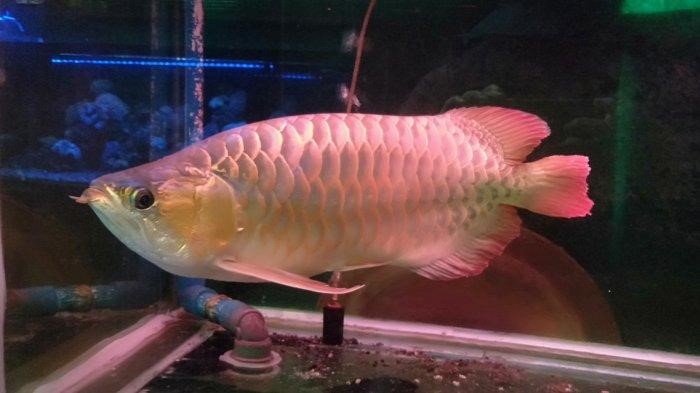
The clearer the water usually indicates the better the quality. This is because the clearer it is, the more sterile the quality of the water will be. For example, humans use water every day for clothing and food needs. Humans drink water which must be sterile and clear; and use the water for bathing and washing clothes. Sterile and clear water is important to ensure human safety and health. But in fish farming, the clarity of the water is not always optimal for media and fish farming, why?
Based on Government Regulation no. 20 of 1990, the classification of water according to its designation is determined as follows:
- Group A: Water that can be used as drinking water directly without prior processing;
- B group: Water that can be used as raw water for drinking water;
- Group C: Water that can be used for fishery and animal husbandry purposes;
- D group: Water that can be used for agricultural purposes, and can be used for urban businesses, industry, hydroelectric power plants.
From the regulations above, it can be seen that the water standard for fisheries is class C. It can be concluded that the use of water is adjusted to the organisms that use it. Humans prioritize clear and sterile water for food and clothing activities. Meanwhile, fish need other components that function to improve the quality of aquaculture water. The quality of aquaculture water is determined by habitat, fish habits, and salinity. Salinity is the salt content in a water which is calculated in units of ppt (parts per thousand). Low-salinity fish will ideally live in fresh waters; fish with moderate salinity, its optimal habitat is brackish waters; and high-salinity fish will be comfortable living in sea waters
Different water Salinity values
- Freshwater fish have a salinity of 0 ppt. The components of fish farming water consist of bacteria and organic matter (feces and leftover feed). Fresh water fish do indeed live in clear water. But the clearer the water does not indicate good water quality. If the water is cleaner and clearer, it indicates the absence of probiotic bacterial organisms. These bacteria function to degrade organic matter in aquaculture water. So, if there are no probiotic bacteria, no one will eat organic matter which if there is more it will reduce the quality of the aquaculture water. Decreasing the quality of aquaculture water causes the growth of pathogens (disease-causing organisms) that can cause fish illness. Examples of pathogens that attack freshwater fish are parasites Argulus sp. and bacteria Aeromonas hydrophila. If the fish is already experiencing symptoms of illness, it must be followed up immediately with a replacement of water, such as moving freshwater fish to high salinity for a few minutes to eradicate and shed the parasites that are attached. In addition to changing water, handling fish diseases can be done by administering antibiotics

- Brackish water has a salinity ranging from 6-29 ppt. Organisms that live in brackish waters tend to have a more varied color, for example the vannamei shrimp and the eel group (Eel). The color of the water in brackish cultivation is caused by the type of phytoplankton that grows. Chlorophyta plankton types are green and Diatoms are brown. Phytoplankton in shrimp farming functions as shading/ barrier to sunlight because shrimp organisms have nocturnal properties, that is, they are active in the dark. In brackish water, administration of probiotic bacteria such as Bacillus be a priority because it plays a very important role in reducing organic matter. Of course, in addition to giving bacteria, the pond needs to be siphoned to get rid of the mud that has accumulated near the drain hole or central drain.
- Salinity in seawater is above 35 ppt. This is what makes seawater fish unable to survive in clear water. High salt levels are needed for the process of osmoregulation in seawater fish. The process of osmoregulation is to balance the concentration of fluids inside and outside the fish's body. Marine organism cultivators will use floating net cages (KJA) to cultivate their commodities. The working principle of the KJA is to drain seawater into the net with mesh size to prevent fish from coming in and out. In other words, marine fish farming takes seawater directly and is used as a cultivation medium. This will make it easier for cultivators to maintain water quality.
Determination of water quality parameters
Controlling water quality is certainly the main key to the success of aquaculture. Aquaculture water quality consists of physical, chemical, and biological parameters. Cultivators must be able to balance these three parameters so that patience and qualified techniques are needed.
- Physics Parameters. The physical parameters of fish farming consist of temperature, brightness, and water color. The temperature can be checked using a thermometer; brightness can be checked with sechi disk. But use sechi disk usually only in deep pools, such as vannamei shrimp ponds. Water color can be checked by organoleptic methods, namely direct examination using the human eye. Weather can affect water quality. Cold monsoons tend to lower the water temperature. For example, during the rainy season, ornamental fish usually need water heater to warm up the temperature.
- Biological Parameters. The biological parameters of fish farming consist of the number of bacteria. How to count the number of bacteria can be done with the method Total Plate Count (TPC) by taking pond water samples. Good probiotic bacteria in fish are species Bacillus sp and Lactobacillus sp. While pathogenic bacteria are groups Vibrio sp. However, the presence of pathogenic bacteria will always be present in aquaculture waters, so cultivators must minimize their growth regularly.
- Chemical Parameters. Elements of the chemical parameters of cultivation consist of dissolved oxygen or Dissolved Oxygen (DO), power of Hydrogen (pH), Ammonia, Ammonium, Nitrite, Nitrate, Phosphate, and Total Organic Matter (TOM). pH levels can be checked using pH pen and litmus paper. Physical and chemical parameters can be checked with a DO meter. This tool displays not only DO levels, but also temperature, pH, ammonia, ammonium, nitrite, and nitrate. Cultivators are advised to use a DO meter because the results are more accurate and practical.
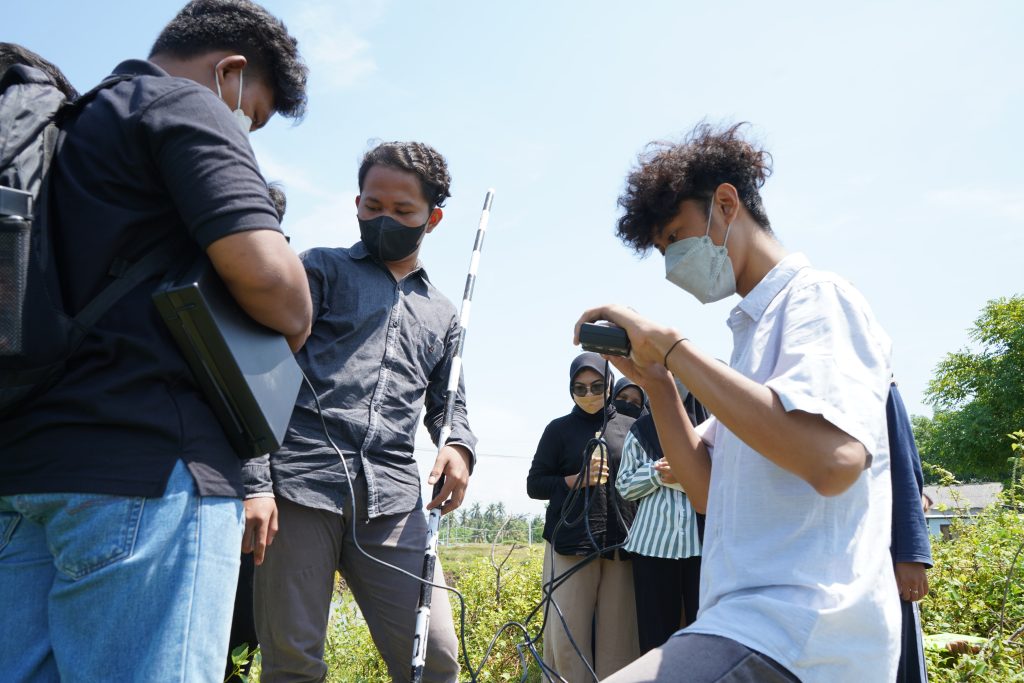
Tilapia cultivation (Oreochromis niloticus) using fresh water has simple water quality control. Efforts to maintain water quality include ensuring optimal aeration, regulating water circulation so that it runs well, not overfeeding, and adequate lighting to maintain pond temperature. Based on the water above, it can be concluded that clear water does not indicate good water quality for fish farming. The clearer the water actually shows that there are no components in the water. Bacteria play an important role in degrading organic matter in a controlled manner.
If cultivators find that their cultivation water is getting clearer and cleaner, then they should be suspected and immediately follow up to restore water quality according to the steps above. Water quality is one of the successes of cultivation that needs to be monitored or quality controlled on a regular basis.
REFERENCES
Agrotech. 2021. Types of Tilapia Pests and Diseases and How to Overcome Them. Reclaimed from Agrotek.id: https://agrotek.id/dinding/hama-dan-Jadii-kan-nila/
Fortuna, SD 2023. How to Maintain the Water Quality for Vaname Shrimp Ponds to Keep it Optimal. Taken Back from Delos Aqua: https://delosaqua.com/id/cara-menjaga-kualitas-air-tambak/
Author: Ijl Taqiy Christya Dewanta (SIKIA Unair Aquaculture Student)
Editor: Acicena C. Nisa


