
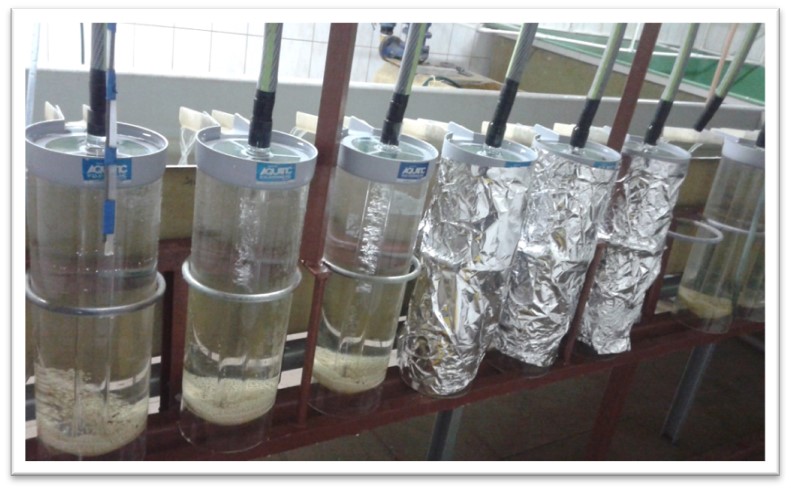
FIKKIA NEWS – Strengthening student capabilities continues to be carried out from various sources. The importance of exploring the potential of knowledge continues to grow as times change. On Monday (08/07/2024) Aquaculture Study Program, Faculty of Health, Medicine and Natural Sciences (FIKKIA) Airlangga University (UNAIR) arrival of lecturers from the Department of Aquaculture, Faculty of Animal Bioengineering, University of Warmia and Mazury in Olsztyn Poland, Prof. Dr. Dorota Fopp-Bayat.
The uniqueness of sturgeon fish brought Prof. Dorota studied genetics and aquaculture research. Sturgeon fish (Acipenser sp.) has a freshwater habitat, namely lakes. The characteristics of sturgeon fish are that they have a long body and a snout in their mouth. The meat and eggs can be consumed by humans. This ancient fish is known as the best caviar egg producer.

Life cycles and climate change are the causes of the threat of extinction
Sturgeon Fish now has endangered status. Living since 200 million years ago, this fish is classified as anadromous. The fish spawning process is carried out in fresh waters, then the juveniles (young fish) will return to sea waters until they become adults, and move again to fresh waters to spawn. This cycle will repeat itself in the life process of sturgeons.
The migration process during the spawning season causes this fish to be threatened with extinction. The migration journey from sea waters to fresh waters is a long and dangerous journey. The influence of environmental conditions also causes fish to fail to reach the lake safely. The emergence of invasive fish such as American crayfish, changes in earth's temperature, and pollution contribute to major problems in sturgeon fish populations. Even in Polish Baltic Waters, species Acipenser sturio has experienced extinction.
Genetic engineering is a conservation solution
Hybridization technology is the engineering of crossing different species, especially endangered species in fish. For example, Bester is a cross between species Whoso whoso x Acipenser ruthenus. The result of crossing two different species will produce a type of fish that is stronger and resistant to fluctuating environmental changes. Apart from being applied to aquaculture cultivation, hybridization also occurs naturally in its natural habitat.

Apart from crossbreeding, gynogenesis technology can preserve the sustainability of sturgeon fish. Gynogenesis is a genetic engineering technology by changing the desired gene. Genes will influence the sturgeon's body resistance and gender.
An unbalanced population of males and females does not produce a large number of eggs. The ideal fish population is a balanced composition of males and females. The principle of gynogenesis is to damage the male sperm genes by UV irradiation and temperature shock to the female gamete genes. Various genetic engineering technologies continue to be used to preserve sturgeon fish.
"Genetic engineering still requires in-depth research because the process takes years and requires high costs." closed Prof Dorota
The activities in this article are the implementation of the SDGs values, point 17. Partnership for the Goals and the 4th Quality Education
Author: Ijl Taqiy Christya Dewanta Arthur Archiles
Editor: Avicenna C. Nisa