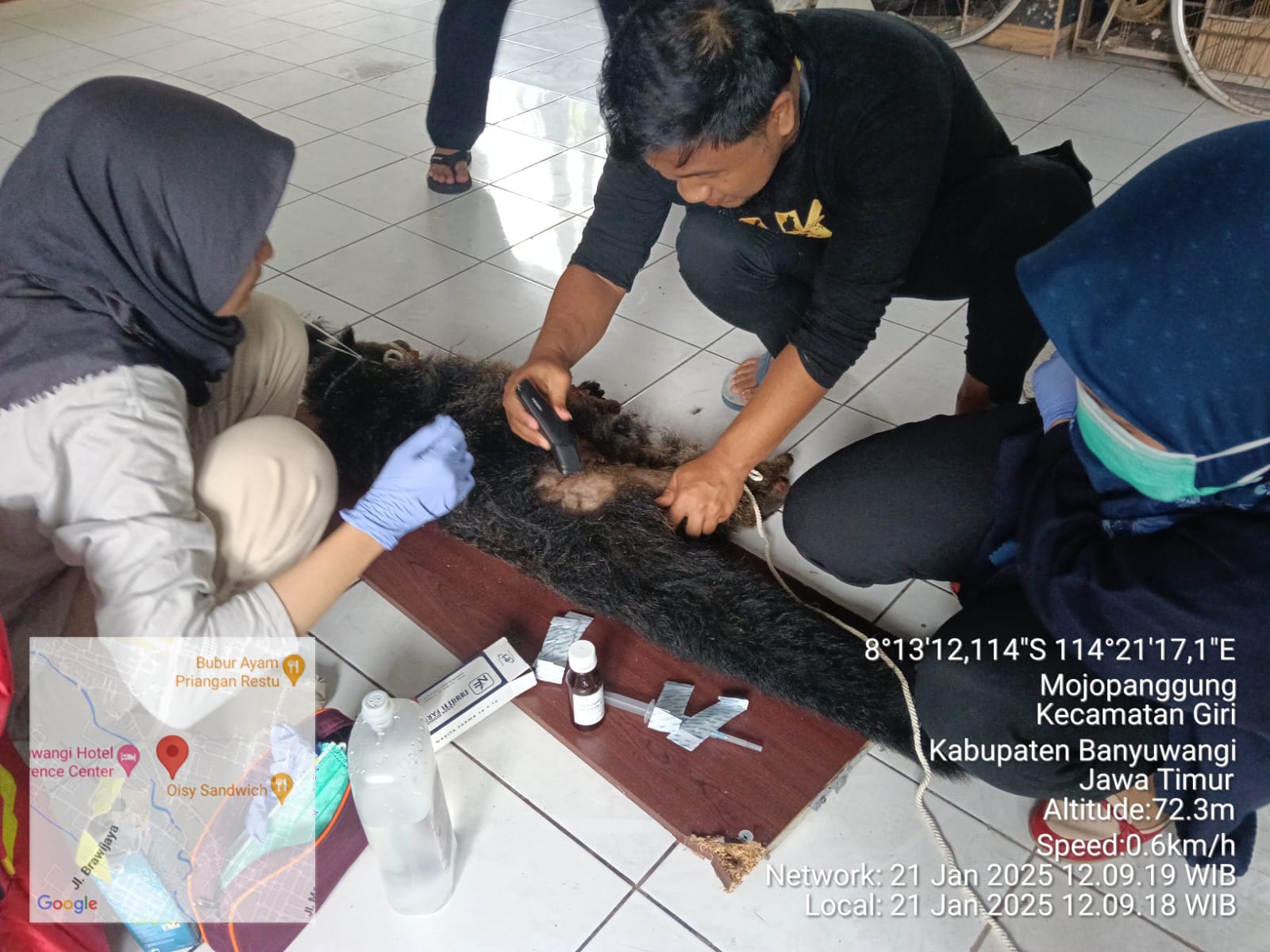
FIKKIA NEWS – Faculty of Health, Medicine and Natural Sciences (FIKKIA) Airlangga University (UNAIR) Banyuwangi through the Veterinary Medicine Study Program has again contributed to wildlife conservation. This time, the FIKKIA veterinarian team had the opportunity to provide health services for rare animals confiscated by the state, namely Binturong. Native Indonesian animals with the Latin name Arctictis binturong successfully secured from Wonosobo Village, Srono District by Banyuwangi Regency Fire Department and Banyuwangi Region V Natural Resources Conservation Agency (BKSDA). The protected wildlife based on Law Number 5 of 1990 concerning Conservation of Biological Natural Resources and Ecosystems is now safely in the BKSDA office.
Inspection Process
The examination took place on Tuesday (21/1/2025) at the BKSDA Office Region 5 Banyuwangi, East Java. From the physical examination that had been carried out, the team found some important information to be followed up on. The Binturong was stressed due to the previous crowded situation which made the animal look traumatized. The adult Binturong was female and weighed more than 15 kg. There was a wound with a fairly long diameter in the inguinal area. The team suspected that the Binturong had been kept by the community by chaining it in that area until the wound had a semicircular elongated pattern and damaged the skin. The suspicion was strengthened by the animal's understanding to accept water from a bottle.
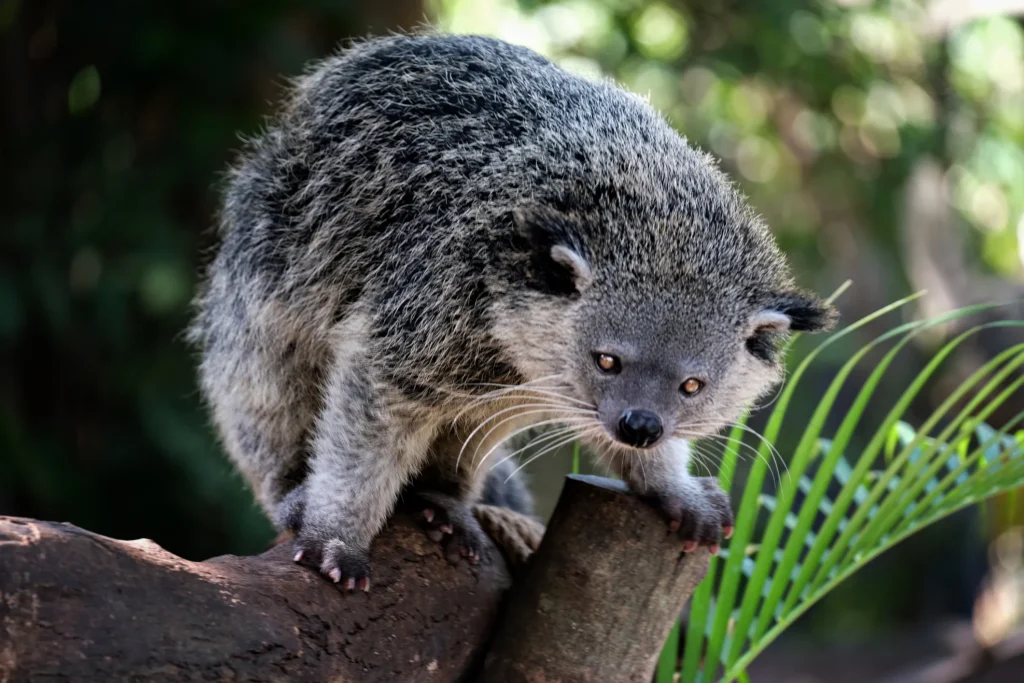
From these results, the FIKKIA Veterinary team rushed to carry out treatment measures by cleaning the wound, removing dead tissue, and stitching. Considering the safety and comfort of the team, they decided to perform general anesthesia first so that the binturong could be maximally restrained. The process of anesthesia to wound care took almost 4 hours by a team of four people.
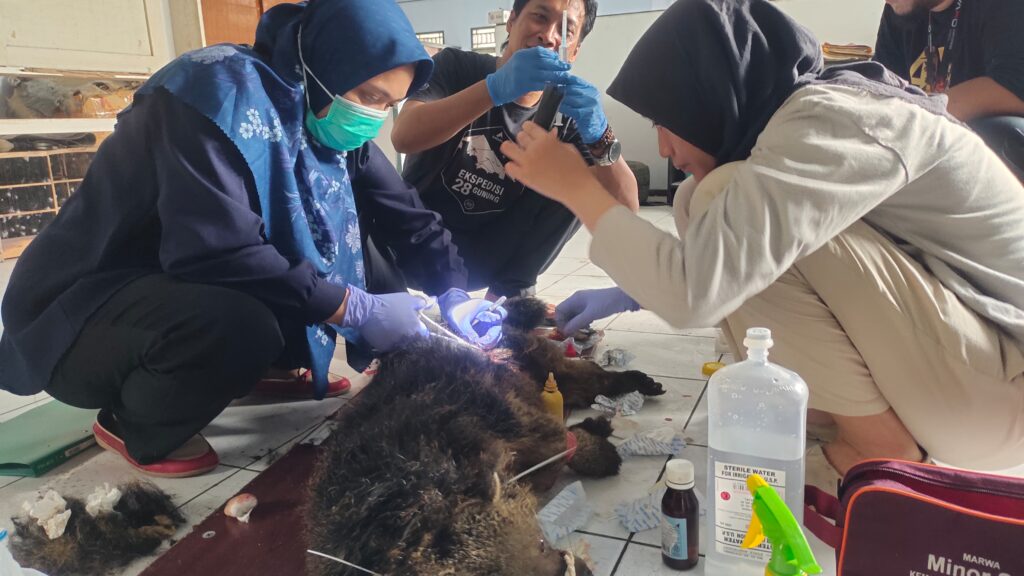
Another health finding was that one of the binturong's eyes also had an abnormality that was suspected to be a cataract. Tests screeners detecting tears from the right eye not flowing optimally. While the other eye is normal. In general, from the test fluorescein no significant ulceration was found in the eyes. In addition to examining the binturong physically, the team also conducted a complete blood profile examination to obtain further hematological information. Finally, the team gave anti-inflammatory injections and vitamins to maintain health after treatment. Until now, the FIKKIA veterinary team continues to coordinate with the BKSDA Region V Banyuwangi to monitor the health condition of this native Indonesian animal.
The activities in this article are the implementation of SDGs values point 15 – Life on land and the 17th Partnership for the Goals.
Author: Azhar Burhanuddin
Editor: Avicenna C. Nisa