


FIKKIA NEWS – Banyuwangi Regency sits on a strategic coastline facing the Bali Strait and the Indian Ocean. This location makes Banyuwangi one of Indonesia's leading fisheries producers. From pelagic fish to reef fish, to several economically important crab species, these waters can be found. Therefore, efforts are needed to map the geographic risks of fish parasite investment. FIKKIA and STRAND conducting periodic research to examine and collect various types of parasite samples from fish caught at TPI Muncar.
Initial Collection of Fish Parasites
Sample collection was conducted over five days (August 11-15, 08) at the Integrated Laboratory 2025, Giri Campus, FIKKIA UNAIR. The samples examined included ribbonfish, tuna, grouper, bearded fish, and blue crab. The examination process began with identification of the fish and crab species and documentation. The following morphometric measurements were performed:
- Total length (body length from tip of mouth to tip of tail)
- Standard length (body length from tip of mouth to base of tail)
- Fork length (body length from mouth to fin branch)
- Head length (length from the tip of the mouth to the rearmost side of the operculum)
- Dorsal fin base length (top fin length)
- Pectoral fin base length (pectoral fin length)
- Anal fin base length (length of the lower rear fin)
- Body depth (height from the lowest part of the stomach to the highest part of the back vertically)
- Caudal depth (height from the lowest and highest parts of the base of the tail vertically)
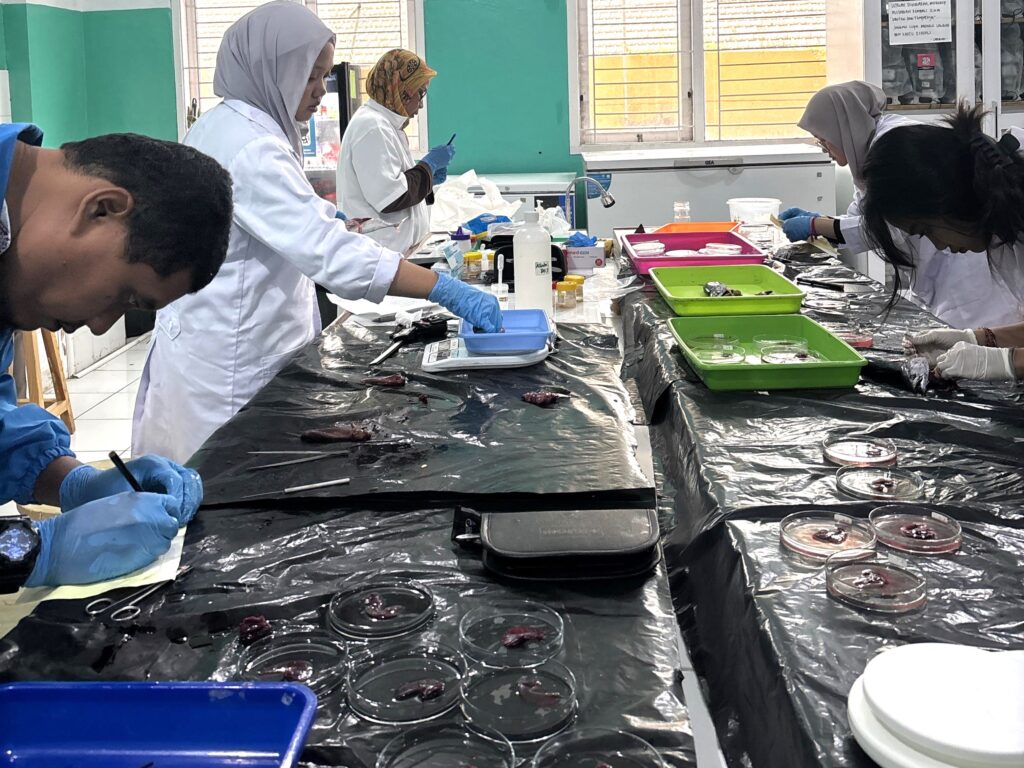
Parasites are typically found on the gills. Therefore, researchers performed dissections and observed each gill filament using a stereomicroscope. Parasites found in each sample were counted and stored in tubes containing fixative fluid for further identification.
Interdisciplinary Research Collaboration
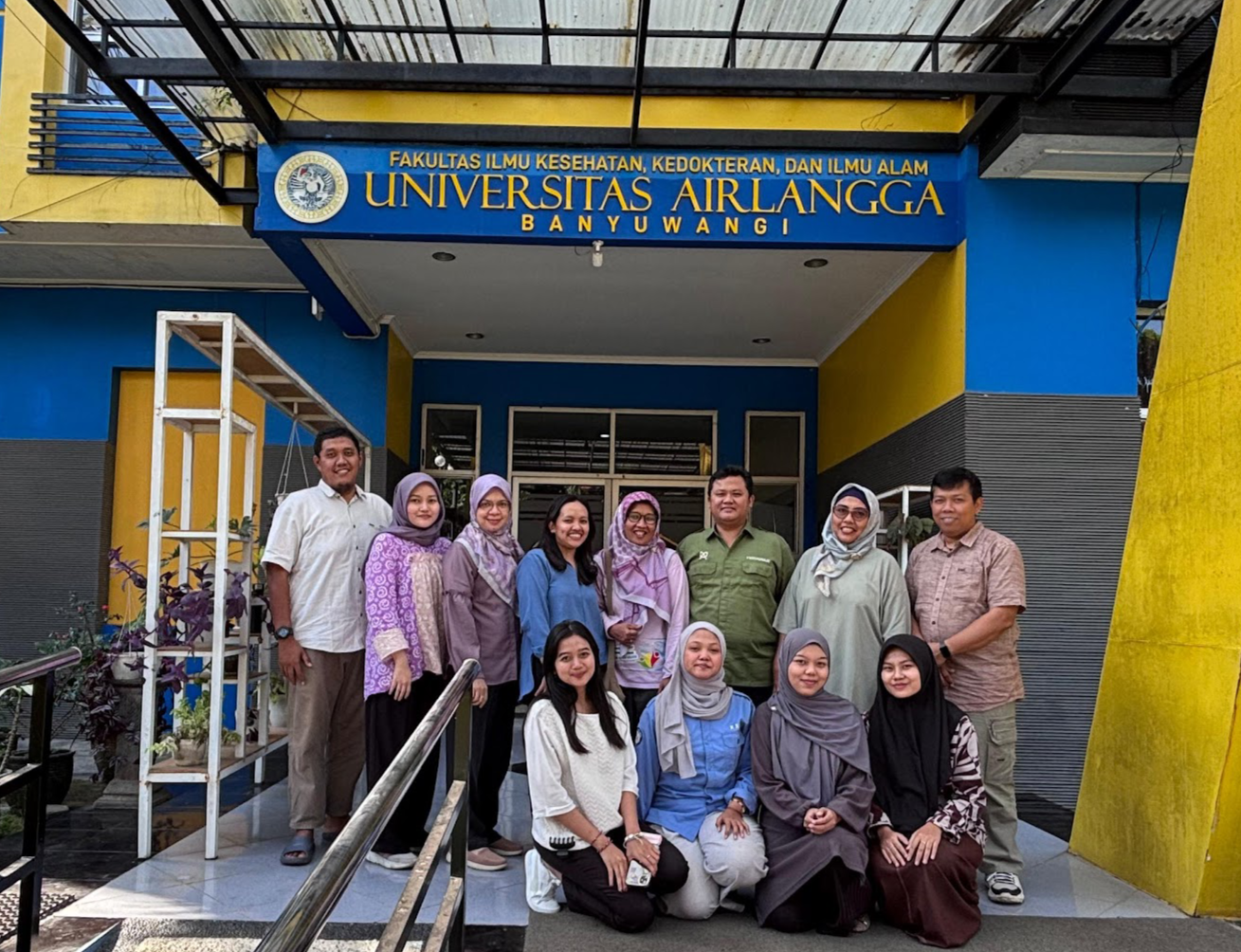
This research is planned to last one year, from June 2025 to December 2026. Various researchers are involved in supporting food security and health in the fisheries sector. The research team consists of five BRIN researchers, two FIKKIA Aquaculture lecturers, one FIKKIA Veterinary Medicine lecturer, one UGM Biomedical Master's student, and several FIKKIA Aquaculture and PPDH undergraduate students.
"This research, which includes geographic mapping of parasite infestations in marine fish species in Banyuwangi, can serve as a reference for reducing health risks. Furthermore, this research collaboration also provides a development platform for aquaculture students," said Maria Agustina Pardede, S.Pi., M.Si., an Aquaculture lecturer and part of the research team.
Some parasites in wild-caught fish pose a zoonotic risk to human health. The findings of this study can help prevent disease outbreaks and design effective health programs. Furthermore, geographic mapping of these parasite infestations can provide insights into the condition of marine ecosystems, which can be used to sustainably manage marine resources.
The activities in this article are the application of SDGs values. point 16 Life Below Water and the 17th Partnerships for the Goals
Author: Syarifatul Jamil
Editor: Avicenna C. Nisa


