Palliative care in veterinary medicine is gaining increasing attention as an approach to maintaining the quality of life of animals suffering from chronic, progressive, or terminal illnesses (IVC Journal, 2026). The success of treatment is no longer measured solely by longevity. It is more about the animal's ability to live the remainder of its life with minimal pain and distress. Optimizing patient comfort and minimizing suffering are the primary goals of palliative care.
Support for the owner is also provided. Therefore, the need for this type of care arises from the shared needs of the patient, client, and veterinarian, resulting from interactions and evaluations that foster deeper affection (Paz et al., 2024). Animal palliative care management will begin when a pet is diagnosed with a chronic, progressive, or advanced disease, or when curative treatment is no longer effective and the focus shifts to quality of life (Honor Pet, 2026).
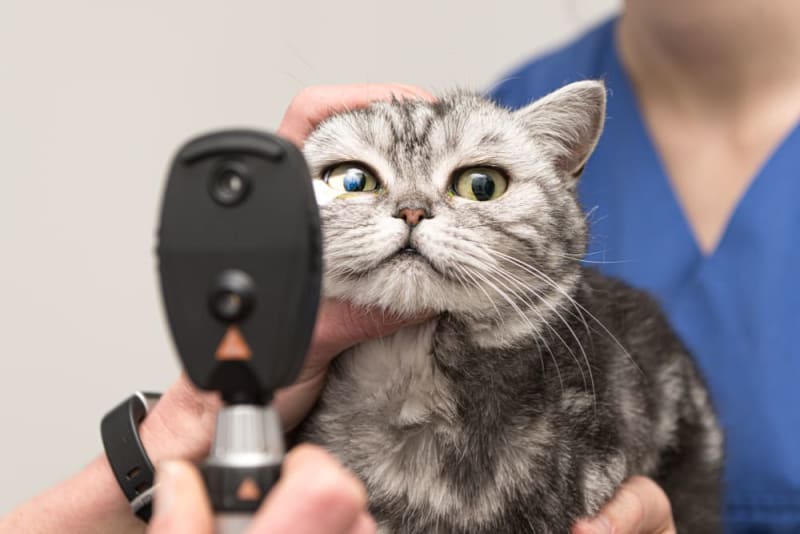
The principle of comfort prioritizes alleviating the suffering of patients with chronic illnesses that will never end. There is no fixed palliative care plan. Plans must be tailored to the specific needs of the pet and its family (Paz et al. 2024). The success of a plan depends heavily on a collaborative approach that includes the family's insight into their pet's quality of life.
The types of palliative care support provided generally include nutrition, hydration, pain management, physical therapy, acupuncture, wound care, massage, environmental modifications, and mobility modifications (CVMBS Communications, 2017). Palliative care with a specific plan is needed in chronic illnesses with unpredictable progression that interfere with daily activities, such as diabetes, chronic kidney disease, and congestive heart disease (Weir et al. 2023).
Natural Death and the Euthanasia Dilemma
In the final phase of life, natural death can be one of the possibilities chosen through palliative care (Ray et al., 2021). This means that natural death will be an option, although it won't always appear visually peaceful. The natural dying process can involve weakness, decreased appetite, changes in breathing, confusion, or loss of consciousness through a gradual or significant decline in condition (Monsó). and Osuna-Mascaró, 2021). Consideration of medical intervention should not be ignored if the patient experiences worsening suffering, such as uncontrollable pain, difficulty breathing, severe anxiety, or signs of diminished comfort. Actions should be taken accordingly. symptoms that happened (Honor Pet, 2026).
When suffering can no longer be controlled through palliative care, euthanasia is considered as an option to prevent prolonged suffering. This decision requires clinical, ethical, and emotional considerations involving the veterinarian and the owner. In such circumstances, some owners feel they can comfort their pets in their final minutes. Others feel their emotional distress will only further their pets' distress. Euthanasia can involve sedatives at much higher doses than general anesthesia (loss of consciousness, loss of pain sensation), but also depresses the cardiovascular and respiratory systems (CVM Cornell University, .
Strengthening the One Health Approach
The One Health perspective provides an understanding that palliative care must integrate animal welfare, human psychological well-being, and environmental responsibility. For owners, caring for animals with chronic illnesses until the terminal stage can cause emotional burdens such as anxiety, fatigue, anticipatory grief, and even guilt when considering discontinuing therapy or euthanasia. Good support and communication from veterinarians are essential to help owners understand the patient's condition and prepare for the potential loss (Mota-Rojas et al. 2023).
Environmental aspects can be addressed through the responsible management of medicines, medical waste, treatment materials, and biological waste. Rational drug use and proper waste disposal are necessary to avoid environmental impacts. From this perspective, palliative care can be viewed as an approach that integrates animal welfare, human psychological resilience, and ecological concerns. These three aspects are part of the responsibility of veterinary services within the One Health framework (Costa et al., 2026).
Author: Azhar Burhanuddin (PPDH student wave III FIKKIA UNAIR)
Reference
- Costa JMD, Prata JC, Queiroga F, Barroso T. One health consideration in veterinary palliative medicine. Vet Anim Sci. 2026;32:100611. doi:10.1016/j.vas.2026.100611.
- Honor Pet. Understanding pet hospice care vs natural death choices [Internet]. 2026 [cited 2026 Oct 29]. Available from: https://www.honor.pet/blog/understanding-pet-hospice-care-vs-natural-death-choices
- IVC Journal. What is veterinary palliative medicine framed within the One Health paradigm? [Internet]. 2026 [cited 2026 Oct 29]. Available from: https://ivcjournal.com/what-is-veterinary-palliative-medicine-framed-within-the-one-health-paradigm/
- Monsó S, Osuna-Mascaró AJ. Death is common, so understand it: the concept of death in other species. Synthesis. 2021;199(1-2):2251-2275. doi:10.1007/s11229-020-02882-y.
- Mota-Rojas D, Domínguez-Oliva A, Martínez-Burnes J, Casas-Alvarado A, Hernández-Ávalos I. Euthanasia and pain in canine patients with terminal and chronic-degenerative diseases: ethical and legal aspects. Animals (Basel). 2023;13(7):1265. doi:10.3390/ani13071265.
- Palliative care for pets: providing comfort and pain relief during illness [Internet]. [cited 2026 Oct 29]. Available from: https://cvmbs.source.colostate.edu/palliative-care-for-pets/
- Palomino-Lázaro L, Rueda-Extremera M, Cantero-García M. Animal-assisted therapy in palliative care: a scoping review. Front Psychol. 2024;15:1478264. doi:10.3389/fpsyg.2024.1478264.
- Paz BF, Ferreira MGPA, Martins KR, Uccella L, Barboza de Nardi A. Practical principles of palliative care in veterinary oncology: alleviating the suffering of the animal, owner, and veterinarian. Vet Med Int. 2024;2024:5565837. doi:10.1155/2024/5565837.
- Ray M, Carney HC, Boynton B, Quimby J, Robertson S, St Denis K, et al. 2021 AAFP feline senior care guidelines. J Feline Med Surg. 2021;23(7):613-638. doi:10.1177/1098612X211021538.