FIKKIA NEWS – The success of a dairy farming business is largely determined by the ability to reach peak production (peak milk production) at the beginning of lactation. This peak production generally occurs 30 to 60 days after calving and is an important indicator of production efficiency throughout the lactation period. Various health problems during the transition period can hinder this achievement. One of the most common diseases, which has a significant economic impact, is Left Displaced Abomasum (LDA) and Right Displaced Abomasum (RDA) which results in abomasum displacement.
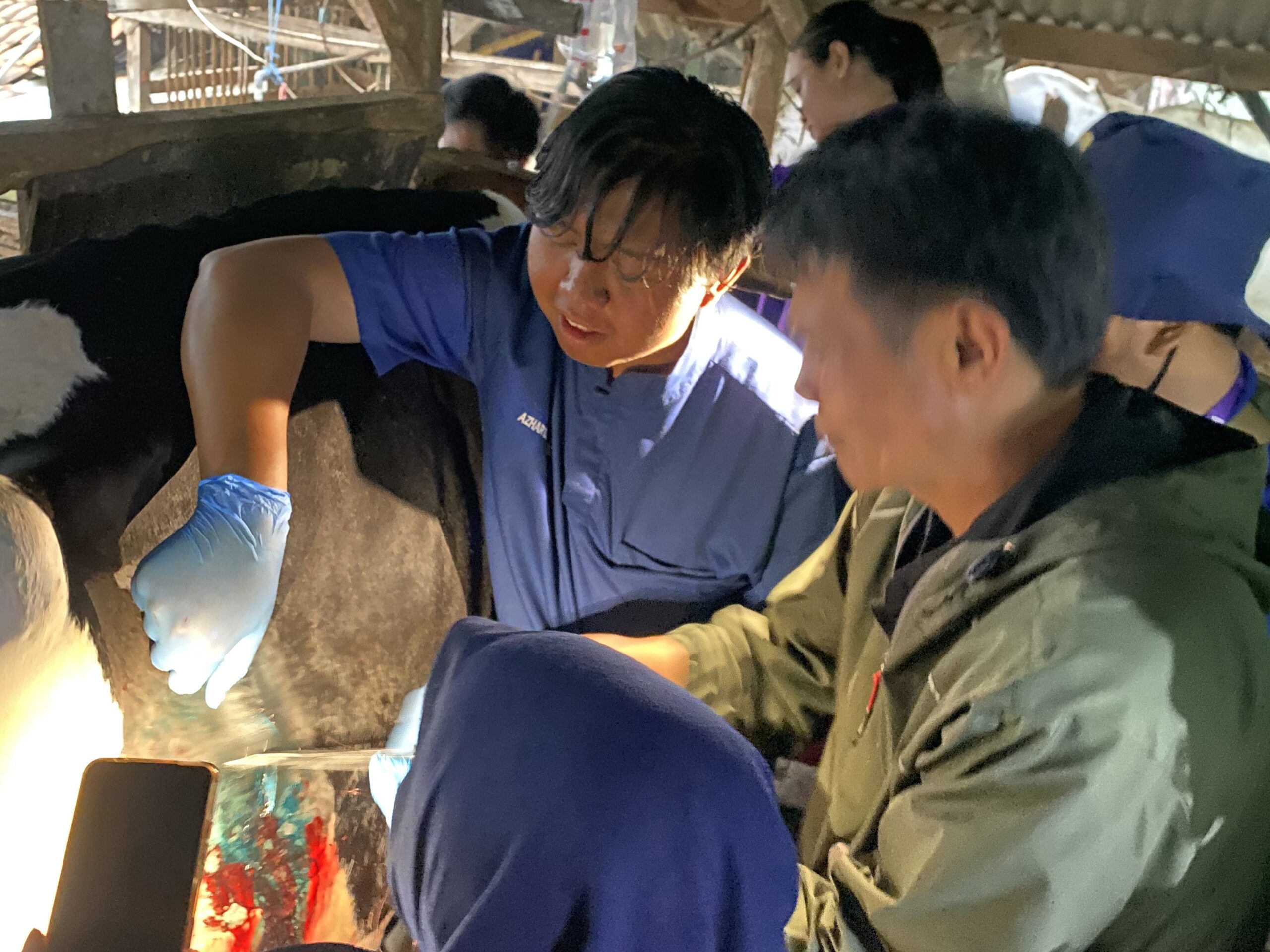
This disorder most often occurs three weeks before and three weeks after calving. This is a transition period when cows experience significant physiological and metabolic changes. This is one of the operations frequently encountered by Group 1 – Wave III of the Veterinary Professional Education (PPDH) of the Faculty of Health, Medicine, and Natural Sciences (FIKKIA) at Airlangga University (UNAIR) Banyuwangi at the Lembang KPSBU (Large Animal Health Practice). The Large Animal Health PKL activity took place from Monday (June 15, 2026) to Friday (July 3, 2026).
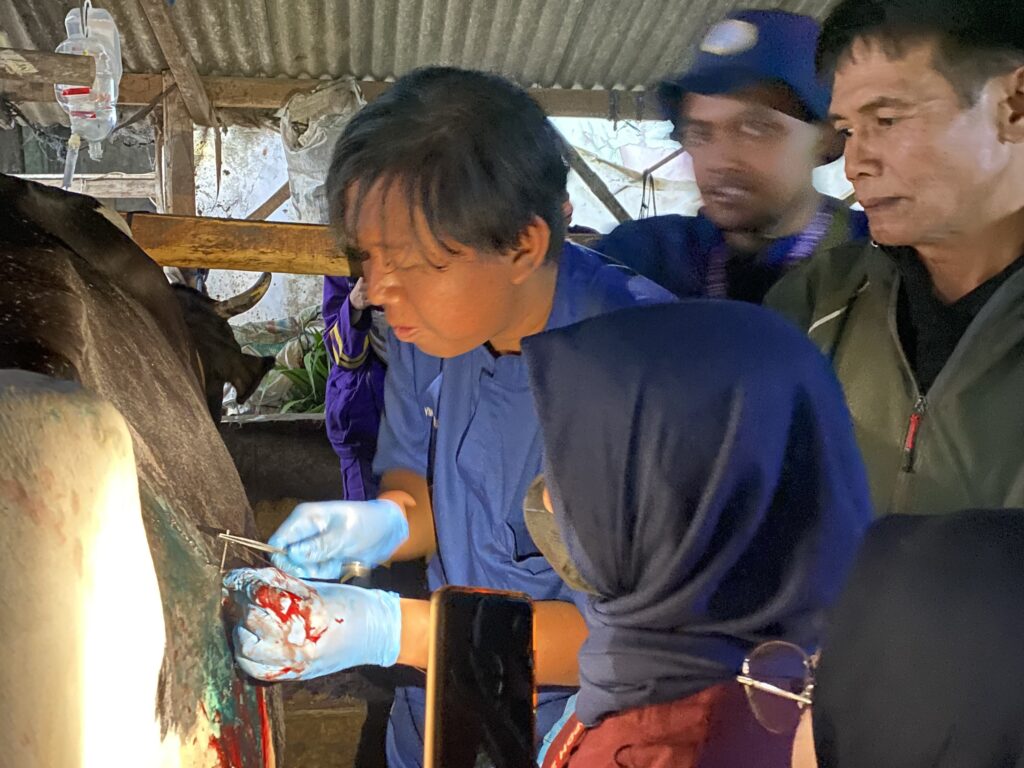
They participated in 12 surgeries, along with co-assistant students from the Faculty of Veterinary Medicine, Gadjah Mada University, and the Faculty of Veterinary Medicine, IPB University. PPDH Gel 3 FIKKIA Azhar Burhanuddin, Alfian Dzaka Fadhil Ramadhan, and Rofiq Riestitanto had the opportunity to assist in the surgical procedures with Dr. Iyus Setiawan, Dr. Asep Suwandi, and veterinary paramedics.
Effects of Digestive Disorders on Milk Production
The abomasum is the true stomach of cattle, which digests food with the help of gastric acid and enzymes. Anatomically, the abomasum is normally located in the lower right side of the abdominal cavity. When motility or movement of the abomasum decreases, gas accumulates inside, causing the organ to shift from its normal position. This shift to the left side is called "stomach distension." Left Displaced Abomasum. Meanwhile, if it shifts to the right side it is called Right Displaced AbomasumIn some cases, RDA can progress to abomasal volvulus, a condition where the abomasum twists on its axis, disrupting blood flow and becoming an emergency requiring immediate surgical intervention.
The biggest impact of both LDA and RDA is a decrease in dry matter consumption (dry matter intake). Cows experiencing abomasum displacement generally lose their appetite, especially for concentrate feed, so their energy intake is unable to meet the increased milk production needs after calving. This condition exacerbates the negative energy balance, and the body begins to use fat reserves as an energy source. As a result, metabolic disorders such as ketosis often occur along with LDA or RDA. This decreased feed intake directly reduces milk production because the nutrients needed for milk synthesis are insufficient.
Cows will fail to reach peak lactation, according to their genetic potential. Early in lactation, the udder requires a large supply of nutrients to achieve maximum milk production. When feed intake decreases due to abomasum damage, the milk production process is also disrupted. Even after treatment or surgery, many cows require significant time to recover, thus missing the opportunity to reach peak production. The impact is felt not only in the first few weeks after calving, but also throughout the entire lactation period, as total milk production is lower than in healthy cows.
Symptoms and Diagnosis of LDA and RDA
Most cases of LDA and RDA occur in the first six weeks after calving. The risk increases in cows with decreased feed intake before calving, ketosis, hypocalcemia, retained placenta, metritis, or difficult calving. Feeding rations high in concentrate but low in fiber can reduce rumen filling and slow gastrointestinal motility, making abomasum displacement more likely. Cows that are overweight at calving are also at higher risk of developing these disorders.
Cows with LDA typically exhibit clinical symptoms such as decreased appetite, particularly for concentrates, a sudden drop in milk production, weight loss, fewer feces, and a lethargic appearance. In RDA, symptoms are often more severe and may be accompanied by circulatory problems. Cows appear dehydrated, have an increased heart rate, and an enlarged right abdomen. If volvulus develops, this condition can be life-threatening if not treated promptly.
Diagnosis is generally made through a clinical examination, listening for a characteristic "ping" sound on the left or right side of the abdomen using percussion and auscultation techniques. Treatment for LDA and RDA should be initiated as soon as possible to prevent further production losses. In addition to correcting dehydration and metabolic disorders, veterinarians typically perform surgical repositioning and fixation of the abomasum. abomasopexyIn cases of RDA that have experienced volvulus, emergency surgery is the only option to save the animal. The sooner treatment is administered, the greater the chance the cow will return to optimal production, approaching its pre-illness level.
Prevention efforts are far more valuable than treatment. Good transition management, balanced rations with sufficient effective fiber, maintaining dry matter intake before and after calving, and controlling metabolic diseases such as ketosis and hypocalcemia are all crucial steps to reduce the incidence of LDA and RDA. Monitoring the cow's body condition and early detection of decreased appetite and milk production can also help identify cases early so that treatment can be initiated promptly.
Author: Azhar Burhanuddin
Editor: Avicenna C. Nisa