


FIKKIA NEWS – Amalia Sofi Ramadanti (KH 23) Faculty of Health, Medicine, and Natural Sciences (FIKKIA) Airlangga University, representing the campus as the sole delegate in Animal Welfare Indonesia International Conference (AWIIC) 2025 at Royal Kuningan Hotel, Jakarta (5-6/11/2025). AWIIC 2025 Bringing together global leaders, practitioners, and activists to strengthen concrete action on animal welfare through collaboration, innovation, and sustainable solutions. Mentored by Dr. Amung Logam Saputro, M.Si., Amalia presented a scientific paper and poster on exotic animal welfare. The focus was on the practice of monkey masking as a traditional entertainment attraction.
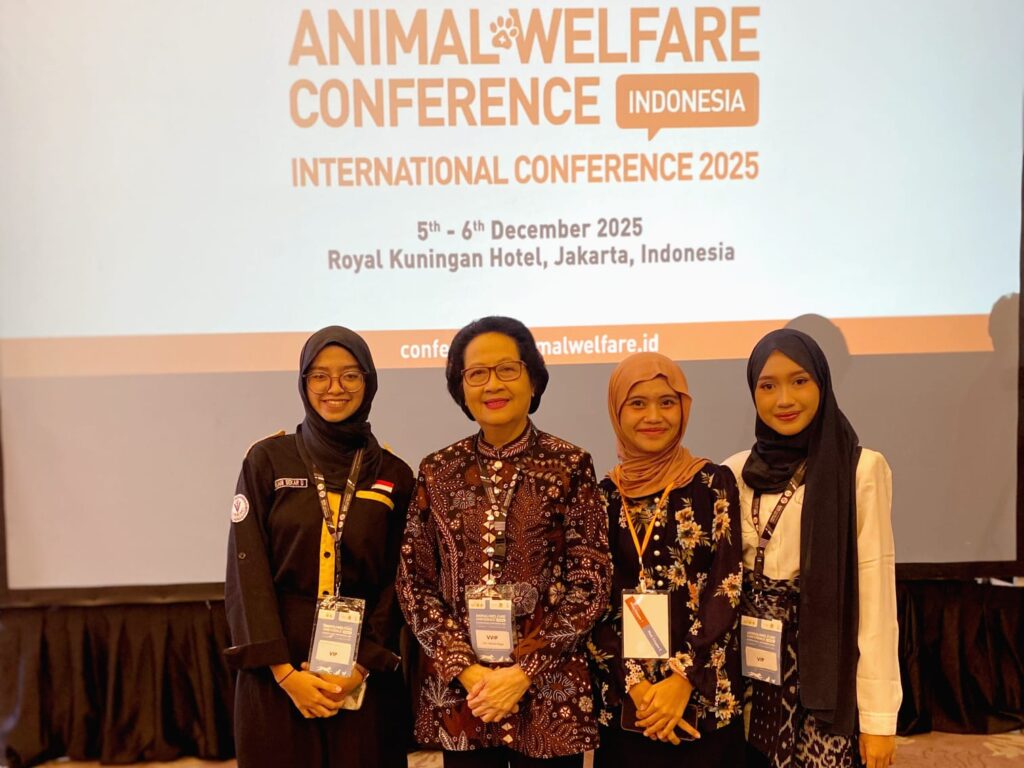
AWIIC 2025, organized by the JAAN Domestic Indonesia Foundation and FOUR PAWS International. This is the first major conference in Indonesia to integrate the Five Freedoms principles: freedom from hunger, discomfort, pain, prevention of natural behavior, and fear. OneHealth.
The opening ceremony was held by Jakarta Governor Pramono Anung, who emphasized Gubernatorial Regulation No. 36/2025. The regulation specifically addresses the control of rabid animals, monitoring illegal trade, and cross-sector collaboration for an animal-friendly city.
Governor Pramono emphasized that Jakarta will continue to strive to become a city that is friendly to all residents, urban animals, and the biodiversity that lives side by side with humans.
"I invite all stakeholders to work together to shape a more sustainable future for the city," Pramono explained.
Long-tailed Monkey Welfare Study for Monkey Masks
Amalia's research examines monkey masks, an attraction in Sulawesi and Java. Monkey masks feature long-tailed monkeys (Macaca fascicularis) exploited as performance objects. Chained, tamed, and forced to walk on stilts for street entertainment. This practice violates the Five Freedoms through chronic confinement, poor nutrition, stress (high cortisol), and psychological trauma. This practice also causes physical injury and prevents natural social behavior, reduces life expectancy by up to 50% and poses a risk of zoonoses such as rabies, tuberculosis, and COVID-19. The UICN has listed long-tailed macaques as endangered since 2022.
The urgency in Indonesia is urgent. The long-tailed macaque population has declined 40% in 42 years due to illegal hunting for attractions, habitat loss, and human-wildlife conflict. Although banned in Jakarta since 2013 (Article 302 of the Criminal Code, Regional Regulation No. 11/1995, Regional Regulation No. 8/2007), weak law enforcement has fueled continued exploitation, lost natural reproductive potential, and threatened forest ecosystems. Amalia recommends rehabilitation, training of handlers, alternative ecotourism, and strict regulations.
This participation resulted in international publications, the PB PDHI-FOUR PAWS network, WOAH/OIE harmonization policy recommendations, and increased scientific presentation capacity.
"AWIIC enriches the integration of welfare within One Health, particularly for exotic animals vulnerable to cultural exploitation, such as the masked monkey," he said.
This contribution strengthens FIKKIA UNAIR's reputation in global forums, supporting ongoing advocacy.
Author: Ajeng Aprisa Simorangkir
Editor: Avicenna C. Nisa


