


FIKKIA NEWS – World Mangrove Day Commemoration (International Mangrove Day) on July 26th is a critical moment to reflect on the role of coastal ecosystems in global climate sustainability. Mangrove forests have long been known as carbon absorbers and storers (blue carbon) which is very efficient. However, recent scientific studies warn that the rate of sea level rise has the potential to suppress this carbon storage capacity in the long term.

This pressing issue has received special attention from Suciyono, S.St.Pi., MP., Lecturer in Aquatic Environmental Management from the Aquaculture Study Program, Faculty of Health, Medicine, and Natural Sciences, Airlangga University. As an academic focusing on aquatic ecosystems and coastal environmental management, Suciyono provided an in-depth review of the global research findings.
Mangroves Play a Crucial Role in Carbon Storage
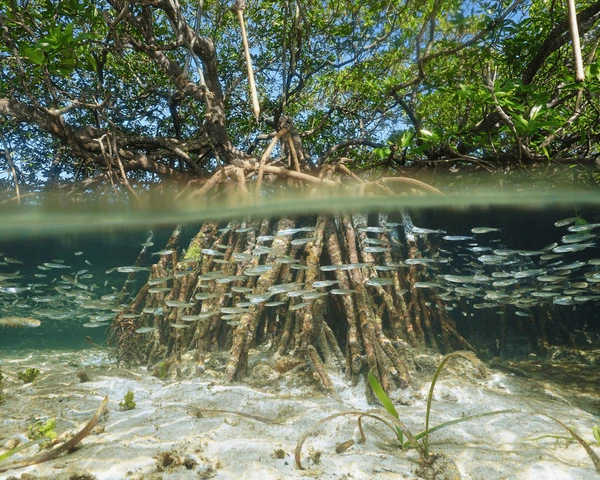
Despite covering less than 1% of the Earth's surface, mangrove ecosystems store approximately 15% of the total carbon stored in the ocean. Most of this carbon is not stored in tree structures, but rather locked up in the muddy soil beneath the mangroves.
However, recent research published in the journal Earth's Future June 2026 titled "The Importance of Scale in the Future of Mangrove Blue Carbon Under Sea-Level Rise" uncovering more complex dynamics. This research, led by the University of Exeter in collaboration with scientists from Colombia and the United States, applied large-scale modeling to predict global mangrove conditions.
Responding to this fact, Suciyono explained that people are often lulled into thinking that mangroves are giant carbon absorbers without considering the limits of their resilience.
"The ability of mangrove soil to lock in carbon is highly dependent on sea level stability. If sea level rises too sharply, this natural sediment accumulation function will be disrupted, and its carbon storage capacity will be drastically reduced," Suciyono responded.
The Risk of Role Reversal to Become an Emission Source
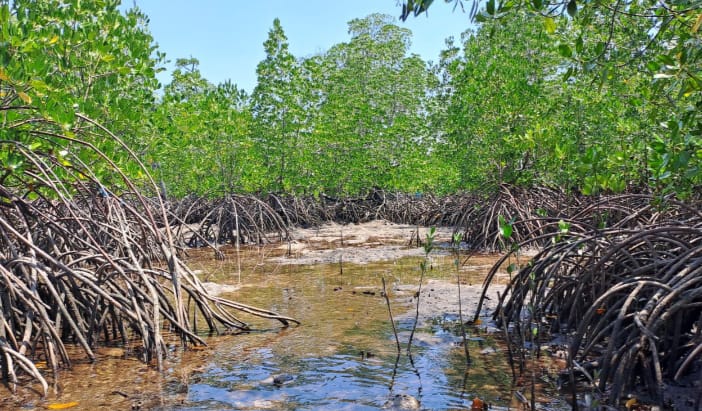
The rate of sea level rise that is too fast risks exceeding the ability of mangroves to accumulate sediment or move (migration) towards the land. If mangrove areas are permanently inundated and die, the soil layer that has locked in carbon for hundreds of years will erode and oxidize. This condition can reverse the function of mangroves—from reservoirs (sink) carbon becomes a source (source) new carbon emissions into the atmosphere.
Regarding this potential threat, Suciyono emphasized the need for a paradigm shift in coastal conservation programs in Indonesia.
"This is a stark warning to us. If coastal management focuses solely on planting without providing space for mangrove land migration, we are allowing this carbon investment to be damaged and become a new emission threat in the future," he stressed.
At the end of his review, Suciyono provided specific guidance regarding the concrete contributions that students can make, particularly in the fields of fisheries, aquaculture, and marine science. He argued that the younger generation should not be mere spectators in the climate crisis.
"Students have a strategic role as agents of change through innovative research, science-based coastal zoning mapping, and education for local communities. Students must begin integrating digital monitoring technology and aquatic environmental management so that mangrove restoration activities become more than just ceremonial actions, but rather sustainable ecological solutions," Suciyono concluded.
Author: Farra Azzahrani


