


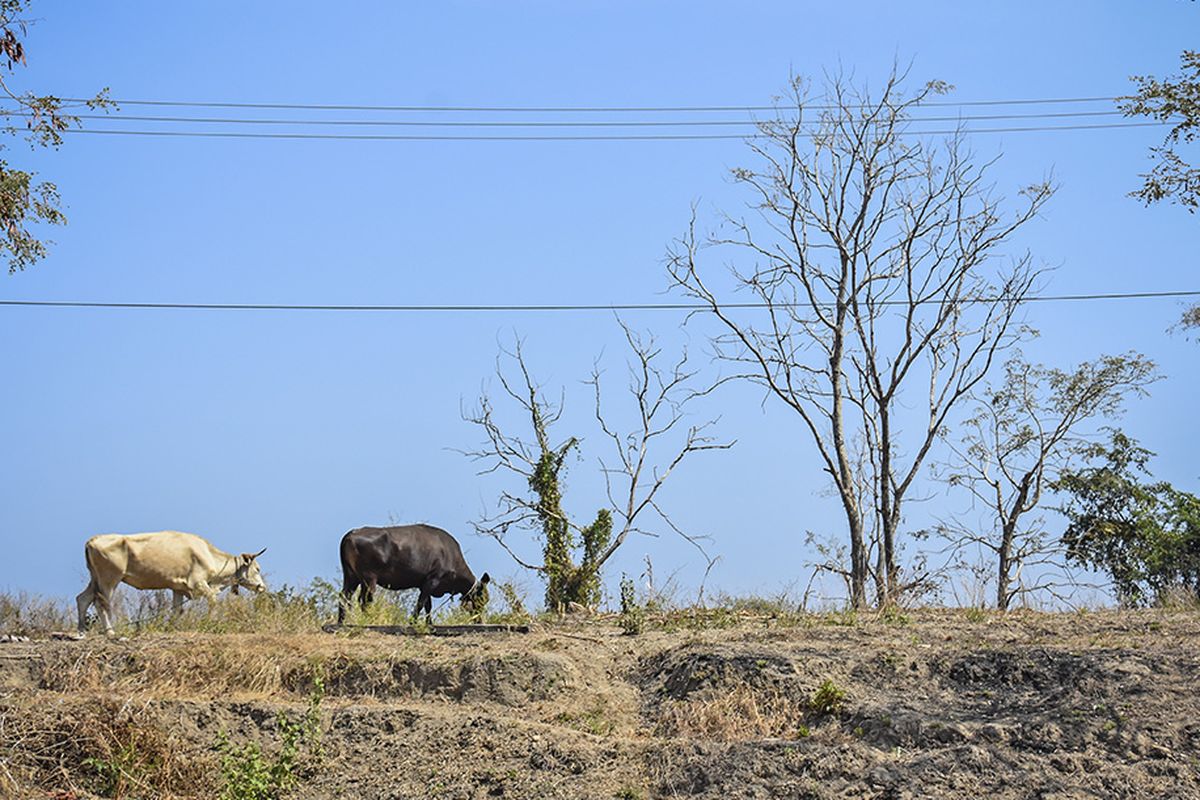
FIKKIA NEWS – Meteorology, Climatology, and Geophysics Agency (BMKG) has released a prediction that Indonesia's dry season will arrive earlier, in April 2026. The El Niño phenomenon, or prolonged drought, causes hotter and drier weather conditions. The Head of the Meteorology, Climatology, and Geophysics Agency (BMKG), Teuku Faisal Fathani, stated that the peak of the dry season is expected to occur in August. Dry conditions have spread significantly, dominating parts of Sumatra, Java, Kalimantan, Papua, Bali, and Nusa Tenggara, as well as Maluku.
The drought has impacted the national agriculture and livestock sectors. Both sectors support Indonesia's food security. In the livestock sector, prolonged drought has made fresh forage, the primary feed source for ruminant livestock, scarce. Yet, the availability of fresh forage is crucial for livestock productivity, both in terms of growth and milk and meat production.
Anticipate Green Forage Starting Now
Dr. Bodhi Agustono, M.Si., Lecturer in Veterinary Medicine FIKKIA UNAIR, explained that the availability of fresh green fodder for livestock such as cows, goats, sheep, and other ruminants will be very limited.
"Conventional livestock farmers who have relied on fresh forage must begin transitioning to semi-intensive or intensive systems. The key lies in feed management," he stressed.
According to Dr. Bodhi, one strategy is to start stocking feed during the rainy season. The abundant green fodder during the rainy season can be preserved so it's still available when the long dry season arrives. This way, farmers won't have to scramble for feed when the grass dries up.
Silage and Hay Methods
There are two main methods of green fodder preservation that are recommended, namely silage and hay (hein).
- Silage is a method of preserving fresh green fodder through anaerobic fermentation. Plants that can be used by livestock farmers include elephant grass, corn, or other green leafy plants with high water content. This process produces feed with relatively stable nutritional content and can be stored for long periods.
- Hay (hein) is a method of drying forage to a low moisture content. Field grasses or legumes such as alfalfa are typically used as the primary ingredients. With a low moisture content, forage can be stored for months without spoiling.
Collaboration between Academics, Government, and Farmers
Although the hay and silage method has long been known in the modern livestock world, Bodhi believes that there are still many livestock farmers in Indonesia who do not understand or apply it.
"The biggest challenge is the lack of knowledge and skills among farmers in making silage or hay. Yet, this method could be a real solution to the long dry season," he said.
Universities and academic communities not only function as research centers, but also as agents of technology transfer to society.

Through community service programs, training, and direct mentoring, academics can help farmers understand feed preservation techniques, teach good practices, and ensure the sustainability of businesses in the livestock sector.
Collaboration between universities, local governments, and livestock groups will accelerate the adoption of this technology in the field.
Bodhi also highlighted the anticipatory measures the government can take, particularly in areas prone to extreme drought. The BMKG's early warning serves as a wake-up call for the government and relevant agencies to anticipate drought, particularly regarding clean water supplies, not only for livestock but also for directly affected communities.
Author: Amalia Sofi Ramadanti
Editor: Avicenna C. Nisa


