


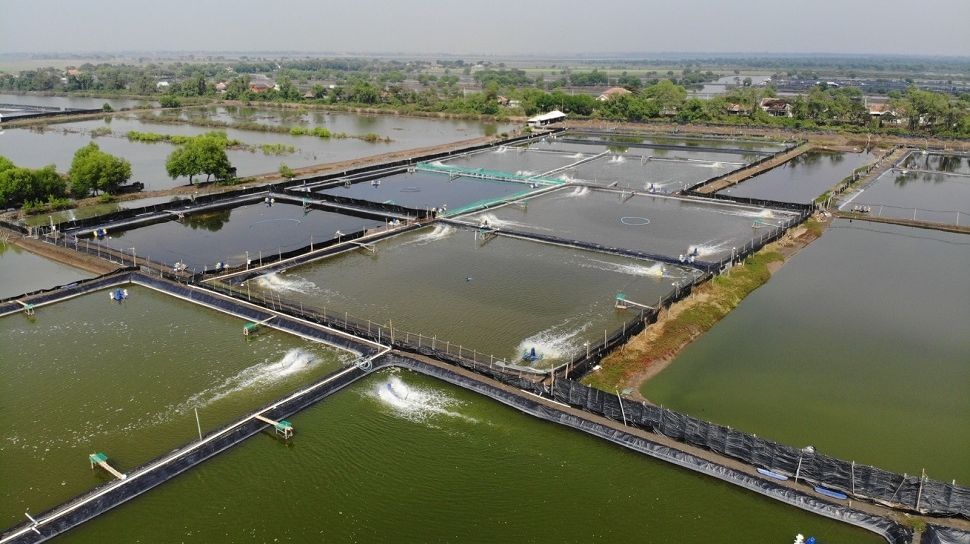
Cultivation of tiger prawns (Penaeus monodon) is a business opportunity that uses sea water as a medium for shrimp living with small capital but reaps abundant profits. Tiger Shrimp is a type of shrimp that is often used for various types of ready-to-eat dishes. Therefore, its existence makes this shrimp have a high market position in its distribution. This one shrimp also has a high export commodity value. Compared to Vaname shrimp, the selling price of tiger shrimp reaches IDR 150 per kg on the market.
According to data from the Indonesian Central Bureau of Statistics, fisheries and marine commodities contribute 1,06% of the country's foreign exchange (Luneto, 2022). However, this cannot be separated from the cultivation problems that are always mushrooming, parasites or harmful bacteria that attack the shrimp habitat, which is a critical point for every farmer. In shrimp farming, one of the bacteria that causes mass mortality is the bacterium Vibrio sp. According to Supono and Elisdiana (2022), these bacteria cause disease White Fecal Disease (WFD) and Acute Hepatopancreatic Necrosis Disease (AHPND). WFD is characterized by clinical symptoms, namely white feces or feces of shrimp floating on the surface of the water, this abnormally colored excrement is caused by damage to the digestive glands (hepatopancreas) which causes the tissue to decay and form aggregates that blend with the feces.
While the clinical symptoms of shrimp affected by AHPND are the hepatopancreas experiencing necrosis (cell death) which causes the intestine to shrink and empty. AHPND in severe conditions can cause death early in cultivation which is around 35-45th day, there have even been cases of mass death before 30 days of cultivation with a mortality rate (death) of 40-100% in 4 days. Among shrimp entrepreneurs, this bacteria often haunts aquaculture ponds even though the seawater used has gone through a strict sterilization process.
One of the innovative ways to reduce the presence of Vibrio bacteria is through water sterilization in aquaculture ponds by creating biofilms from river rock formations. According to Zamroni (2018), this stone arrangement is formed without using cement adhesive and is arranged in a similar way trickling or dams that trap water. These stones within 6-12 months will grow beneficial biofilm bacteria (gram positive) which will compete for nutrients and space with Vibrio sp (gram negative). Biofilms can purify water naturally rather than the disinfectants often used by farmers, which at a minimum may be resistant to Vibrio bacteria. This biofilm can decompose harmful compounds in the waters.
The use of stone this time is more profitable from an economic point of view, because it can save up to IDR 20 million for production costs and IDR 150 million for chlorine (disinfectant) costs (on a cultivation area of 6,2 Ha). With this innovation, anticipating the Vibrio parasite can be done easily and in a solution, considering that the Vibrio bacteria is very deadly for shrimp. Innovations are expected to remain solutive in the futuristic future.
Author: Dhea Puspita Hakim (SIKIA Aquaculture Undergraduate Student)
Editor: Acn
Bibliography
Luneto, R. 2022. Competitive Advantage of Pinrang Tiger Shrimp in International Trade. Review Of International Relations, 4(1): 1-20.
Supono, S., & Elisdiana, Y. 2022. The Effectiveness of Mangrove Rhizophora Apiculata Extract (Tomlinson, 1986) In Inhibiting Vibrio Parahaemolyticus Causes Disease in Shrimp Vaname Litopenaeus Vannamei (Boone, 1931). Journal of Indonesian Swamp Aquaculture, 10(2): 199-211.
Zamroni, M., 2018. River Stone Against Shrimp Bacteria. [Online] Available at: https://www.google.com/url?sa=t&source=web&rct=j&url=https://kkp.go.id/brsdm/artikel/5545-batu-kali-melawan-bakteri-udang&ved=2ahUKEwjKrKm1yaj-AhUe-jgGHcjrBhkQFnoECAwQAQ&usg=AOvVaw3qvqXXjBlIDhKC_yVpbEDV [Accessed April 2, 2023].


